Quick Answer
Temporary pickleball lines can work for informal gym sessions only when the facility owner approves the marking method, the surface is appropriate, and cleanup is planned before setup starts. On finished maple athletic floors, the Maple Flooring Manufacturers Association does not recommend adhesive tape for temporary court boundaries. If the facility allows a temporary product on another surface, follow the exact product data sheet, test in a low-risk area, and treat the result as a practice layout, not proof of an official tournament court.
Start With the Floor Owner, Not the Tape
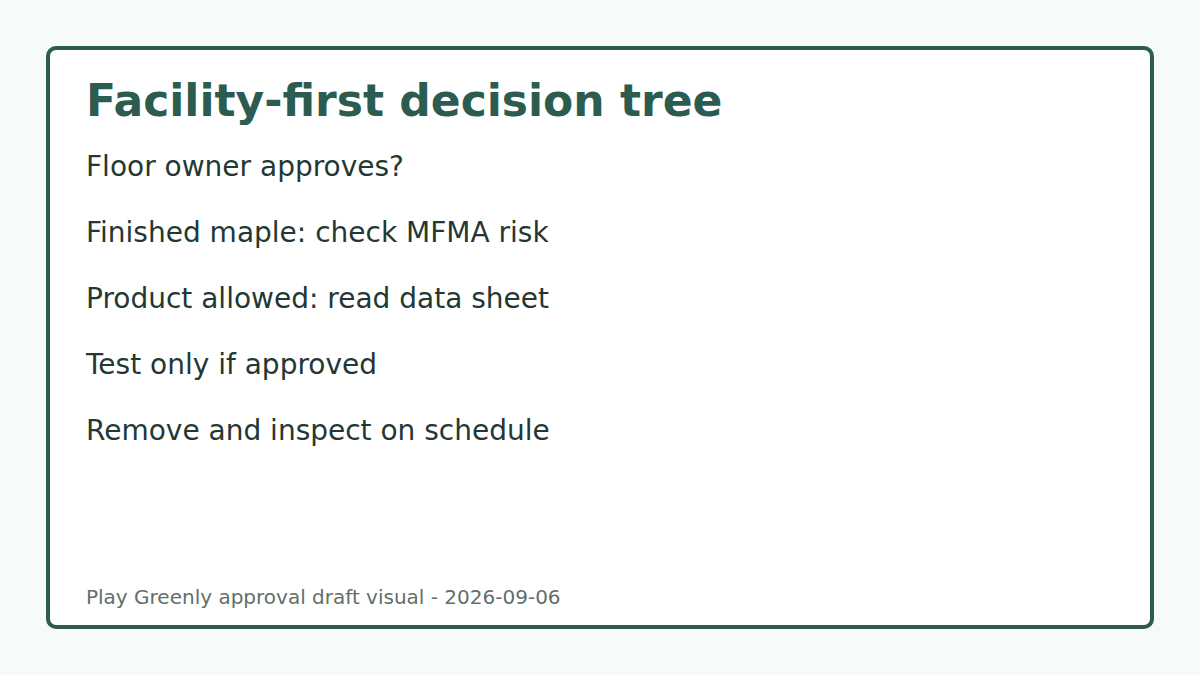
The first question is not which color tape looks best. It is whether the facility allows temporary markings on that exact floor.
Finished maple gym floors are a special case. MFMA says it does not recommend masking, theatrical, construction, electrical, duct, adhesive, or other tape for temporary court boundaries on a finished maple floor. The association warns that removal can pull up layers of finish and that tape can change friction on a playing surface.
For a school, club, church gym, camp, or recreation center, that means the floor owner's rule controls the setup. If the owner says no tape, the answer is no tape.
The Pickleball Layout Basics
USA Pickleball's rule resources define the formal rule environment. For a standard court, the common headline dimensions are 20 feet wide by 44 feet long, with a non-volley zone at each side of the net.
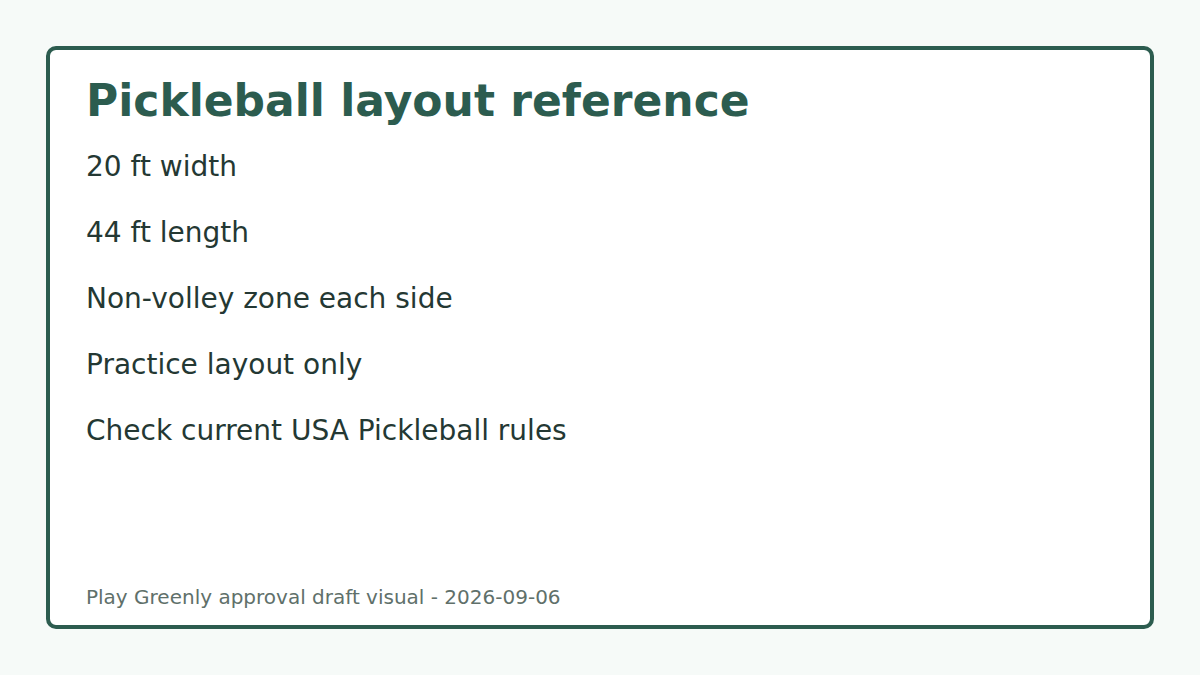
Use those dimensions only as a layout reference. A temporary open-gym setup may be useful for drills, beginner play, or event entertainment, but it should not be described as regulation, tournament-ready, or sanctioned unless the exact court, surface, equipment, and event authority support that claim.
A Safer Temporary-Line Decision Tree
Use this sequence before setup:
- Identify the floor type and owner.
- Ask whether temporary adhesive markings are allowed.
- If the floor is finished maple and the owner follows MFMA guidance, avoid tape.
- If the owner allows a product on another surface, read the product data sheet.
- Clean and prepare only as the product maker specifies.
- Test a small hidden or low-risk area if the facility approves testing.
- Record install time, removal time, residue, surface marks, and player feedback.
- Remove lines on the agreed schedule, then inspect with the facility owner.
If a Product Is Allowed, Read Its Data Sheet
Product-specific instructions matter. For example, the 3M Durable Floor Marking Tape 971 technical data sheet says surfaces should be clean, dry, and smooth, and may need cleaning to remove oils, grease, moisture, waxes, coatings, finishes, dust, dirt, and grime.
That is a product-data-sheet example, not a recommendation to put industrial floor tape on a gym floor. The facility still decides whether the product is allowed, and the product maker's instructions do not override floor warranty, maintenance, safety, or event rules.
Cleanup Is Part of the Setup
Temporary lines are not complete until removal is planned. Assign one person to own cleanup, set a removal deadline, and take before-and-after photos for the facility record.
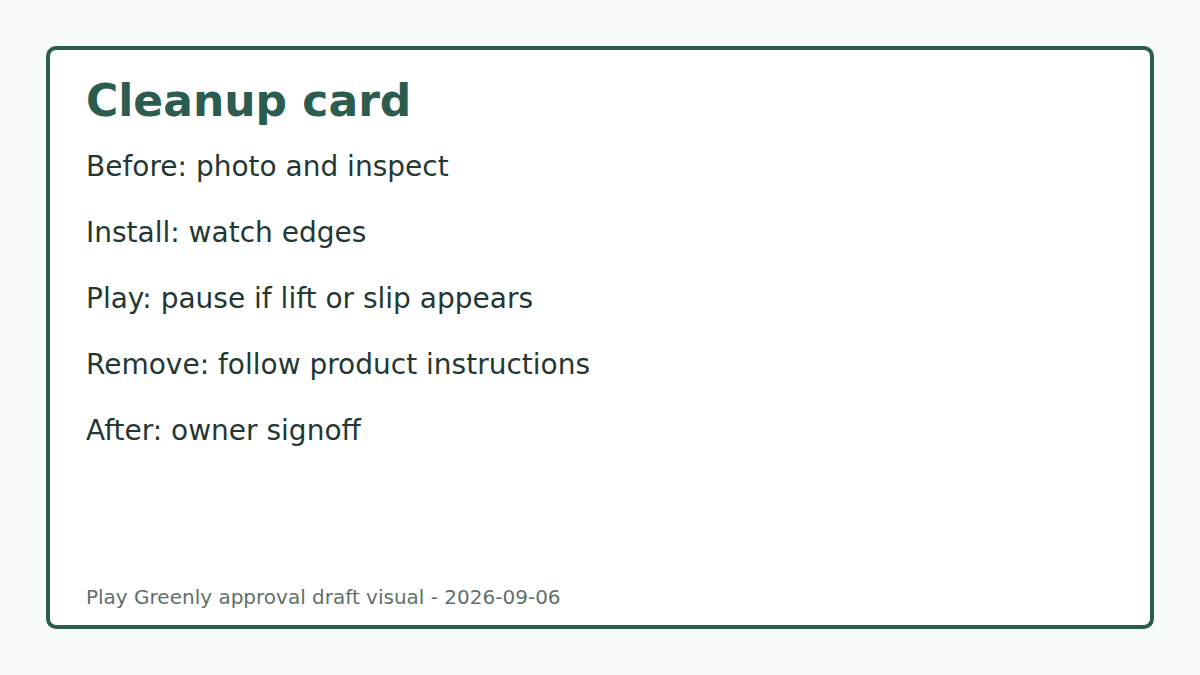
OSHA's walking-working surface rule is not a sports-court standard, but it gives useful housekeeping discipline: activity surfaces should be kept clean, orderly, dry, and free of hazards. For a temporary pickleball setup, that translates into checking lifted edges, residue, loose strips, moisture, dust, and post-removal marks before people play again.
What Not to Claim
Avoid these claims unless there is exact evidence for the facility, product, and event:
- safe for all gym floors;
- no-residue guaranteed;
- regulation court;
- tournament-approved;
- will not change traction;
- approved for maple floors;
- removable on any schedule;
- eco-safe or sustainable without specific substantiation.
Better wording is narrower: "temporary practice layout for a facility-approved surface," "follow the floor owner's rule," and "test and remove under the product instructions."
Where Play Greenly Fits
This article supports Play Greenly's sports-expansion content lane. It should not present Play Greenly as a maker of gym-floor tape unless a product page and evidence package exist. The value is the same claim discipline used in golf-ball content: name the exact use case, name the limitation, and do not stretch a product attribute into a universal safety or permission claim.
Related guides
- Temporary Sports Floor Line Marking: Tape, Safety, and Cleanup Checklist
- What Can an Eco Golf Event Sponsor Say on Signs?
- Plan an Eco-Friendly Golf Tournament
- 7 Backyard Golf Games for Beginners
- Golf Ball Environmental Claims Glossary
Frequently asked questions
Can you use tape for pickleball lines on a gym floor?
Only if the facility owner allows it for that exact surface. MFMA does not recommend adhesive tape for temporary boundaries on finished maple floors.
What size is a pickleball court?
Use USA Pickleball's current rules as the formal reference. A common standard court is 20 feet wide by 44 feet long, but a temporary practice setup should not be called regulation or tournament-ready unless all requirements are met.
What tape should I use?
Start with the floor owner's rule and the product data sheet. Do not assume a product advertised for floor marking is appropriate for a finished gym floor.
How do you remove temporary pickleball lines?
Follow the product maker's removal instructions and the facility's maintenance rule. Inspect for lifted finish, residue, marks, moisture, and traction concerns before reopening the area.
Is this a Play Greenly product guide?
No. It is an evidence-led sports-floor planning guide. Play Greenly should not claim a gym-floor marking product unless a product and evidence package exist.