Quick Answer
For a temporary volleyball court on a gym floor, confirm the facility's floor-finish rules before putting down any tape or marker. Then measure the court, choose a removable line method the floor owner approves, test a small hidden area, label sport-specific lines clearly, and assign cleanup before play begins. A standard high-school volleyball court diagram shows a 60-foot by 30-foot court with 2-inch lines, but temporary markings still need local approval and surface-specific caution.
Start With the Floor Owner, Not the Tape
Before you measure a sideline, ask who controls the gym floor. That may be an athletic director, facilities manager, school district, recreation center, landlord, or flooring contractor.
- Is temporary marking allowed on this surface?
- Which products or methods are approved by the floor owner or finish manufacturer?
- How long can the lines stay down?
- Who is responsible for removal, residue inspection, and damage reporting?
If the answer is unclear, do not improvise with painter's tape, masking tape, duct tape, electrical tape, or construction tape.
Why Finished Maple Floors Need Extra Caution
MFMA guidance says it does not recommend masking, construction, electrical, duct, or adhesive tape for temporary court boundaries on a finished maple floor. The concern is not only residue. A tape strip can have a different coefficient of friction than the playing surface, which can affect starts, stops, pivots, and player footing.
That does not mean every gym has the same rule. It means the safest article advice is narrow: follow the floor owner's written guidance and test only approved temporary-line methods.
Volleyball Layout Basics
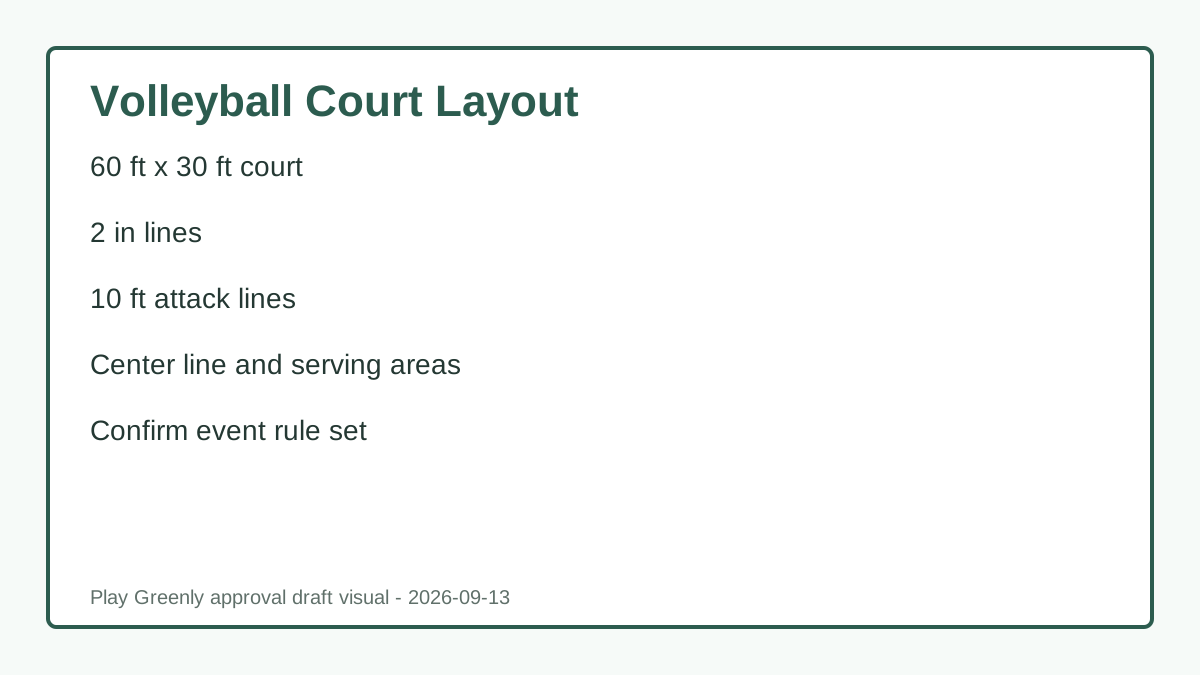
For a standard high-school volleyball diagram, NFHS shows a 60-foot by 30-foot court. Lines are 2 inches wide. The attack line is 10 feet from the center line on each side, and the court should have clear surrounding space. Use the governing body, league, school, or event rule set for the exact competition you are hosting.
For casual PE or recreation play, the same diagram is useful as a layout reference, but do not present a temporary setup as competition-ready unless the event authority approves it.
Temporary Line Method Checklist
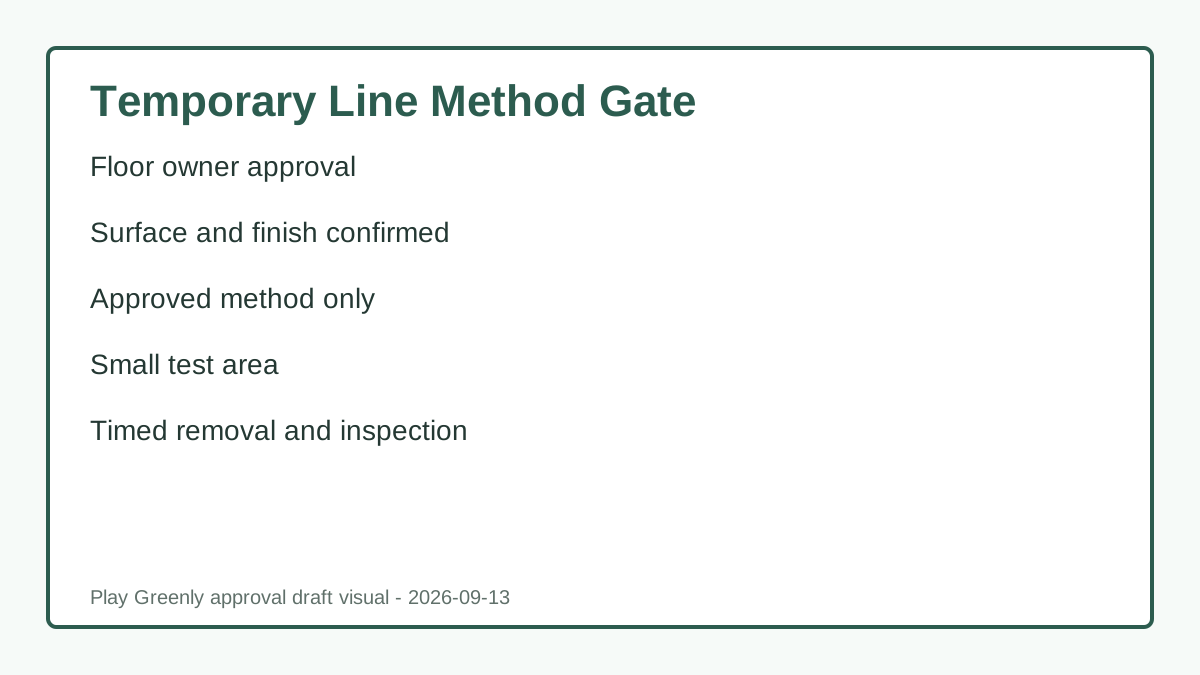
Use this gate before a shared-gym event:
- Confirm the sport and rule set.
- Confirm the floor surface and finish.
- Get written approval for the temporary-line method.
- Clean only as the facility permits.
- Test a small approved area first.
- Mark the volleyball lines in a color that does not confuse basketball, pickleball, badminton, or futsal lines.
- Walk the court for glare, peeling edges, raised seams, and traction changes.
- Remove the lines on the agreed schedule.
- Inspect the floor after removal and record any issue.
What Not to Claim
Avoid language that turns a temporary-line product or method into a guarantee:
- safe for every gym floor;
- residue-free in all conditions;
- approved for competition;
- no slip risk;
- no damage risk;
- suitable for every finish;
- permanent-line quality;
- official layout without checking the event rule set.
Better wording is: “temporary volleyball line plan for approved gym surfaces,” “check the floor owner’s rules first,” and “verify the applicable volleyball diagram before competition use.”
A Simple Setup Sequence
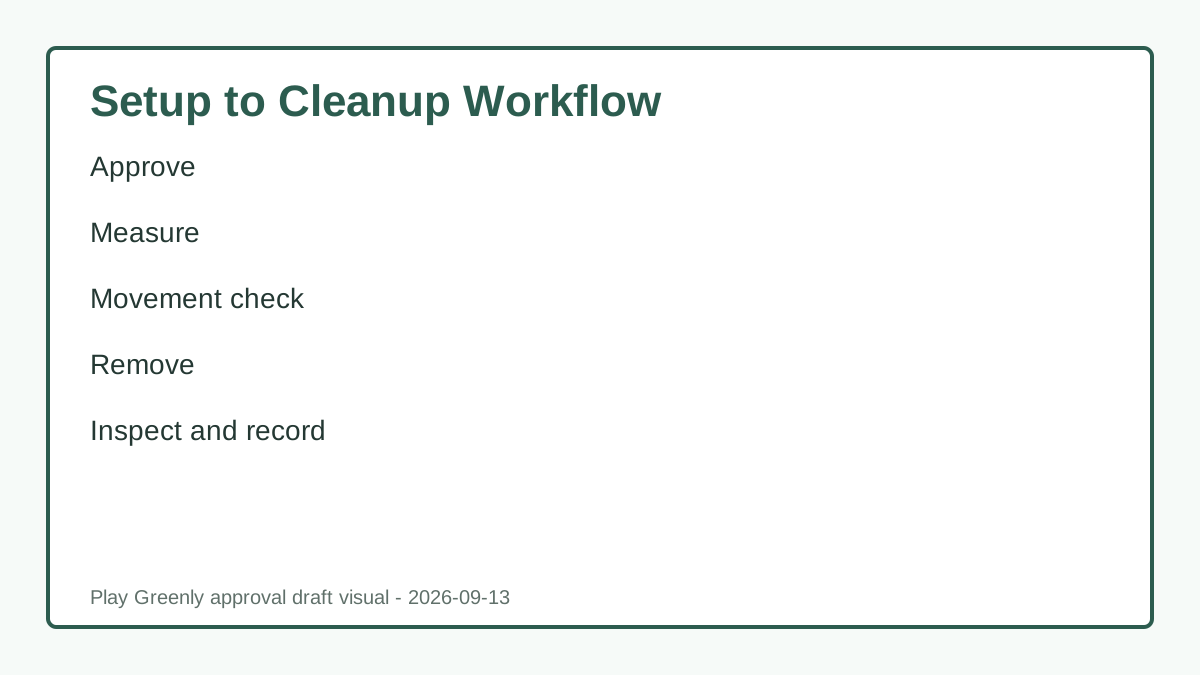
Set the net system first if the facility requires fixed floor sleeves or anchor points. Confirm the center line, then square the sidelines and end lines. Mark the attack lines after the main rectangle is true. Keep a written count of tape rolls, markers, or line pieces used so cleanup can be verified.
Before players arrive, have one person walk the line path in volleyball movements: lateral shuffle, stop, pivot, approach steps, and backpedal. If any line edge lifts or feels slick, stop and correct it before play.
Related Guides
Temporary Sports Floor Line Marking
Temporary Pickleball Lines on Gym Floors
Plan an Eco-Friendly Golf Tournament
Golf Ball Environmental Claims Glossary
Frequently Asked Questions
What size is a volleyball court on a gym floor?
NFHS diagrams show a standard court as 60 feet by 30 feet, with 2-inch lines. Confirm the rule set for your school, league, or event before marking for competition.
Can I use painter's tape for temporary volleyball lines?
Do not assume painter's tape is acceptable. MFMA warns against several common adhesive tapes on finished maple floors. Use only methods approved by the floor owner or finish manufacturer.
How long can temporary volleyball lines stay down?
Only as long as the facility allows. Some methods are intended for short sessions, and adhesive risk can change with time, temperature, finish condition, traffic, and cleaning.
Are temporary lines competition legal?
Not automatically. Competition use depends on the event authority, rule set, line dimensions, visibility, safety, and facility approval.
What should staff check after removing temporary lines?
Check for residue, finish pull, discoloration, scuffs, raised grain, slick areas, and missed line pieces. Record the result so the next setup improves.