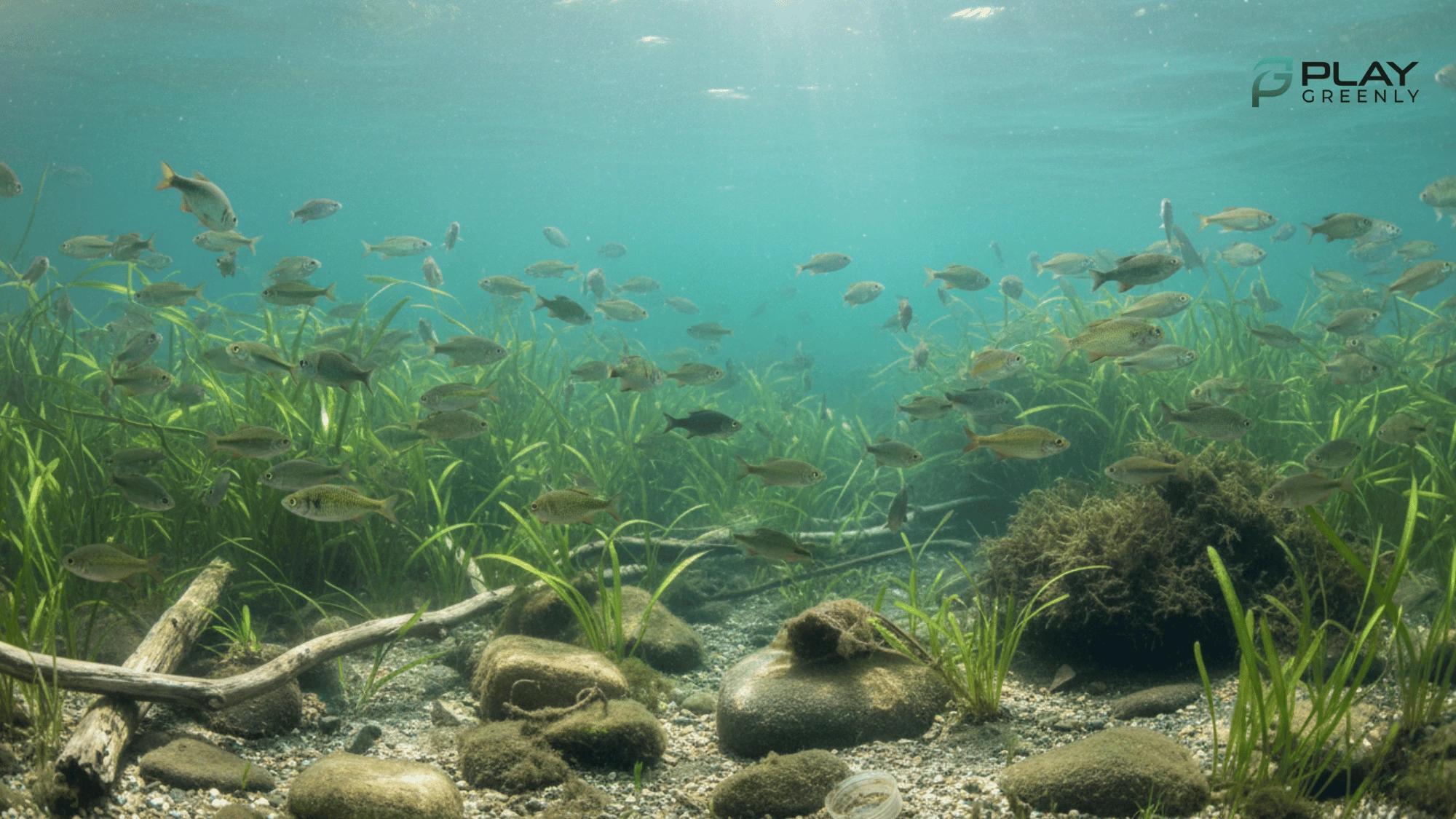
Every golfer knows the moment. The swing feels smooth, the ball flies perfectly… and then… plop. It disappears into the lake. Most players shrug it off because it feels harmless. After all, it is just one ball, right?
But here’s the reality few golfers ever hear:
Traditional golf balls do not break down naturally in water. In many freshwater environments, they can persist for decades and in some cases far longer, becoming part of a growing, hidden pollution problem in lakes around the world.
So the real question is:
Are golf balls bad for lakes, and what should modern golfers do about it?
This guide breaks down the genuine science, environmental impact, and safer modern alternatives.
Key Takeaways
Before diving deeper, here’s a high-level snapshot of what research and environmental assessments reveal about golf balls in lakes and freshwater systems.
- Traditional golf balls are made from durable plastics that can persist in lakes for decades or longer, depending on environmental conditions.
- Over time, weathering can cause submerged balls to shed microplastic particles that interact with sediment, plants, and aquatic life. (NOAA)
- Cleanup efforts in certain coastal and freshwater regions have recovered tens of thousands of lost golf balls from limited areas, indicating large-scale accumulation over time.
- Many golfers unknowingly contribute to long-term pollution through casual water shots.
- Dissolvable, biodegradable golf balls exist as a safer option for recreational use near lakes and ponds.
Taken together, these points show that lost golf balls are not just temporary debris, they represent a long-term environmental issue that builds quietly beneath the surface.
What Happens When a Traditional Golf Ball Lands in a Lake?
When a standard golf ball sinks, it does not dissolve or soften. Its polymer-based construction is designed to resist moisture, pressure, and temperature change.
In freshwater environments, especially colder lakes with limited sunlight, degradation is extremely slow.
As a result, a large portion of golf balls lost in lakes are likely to remain there for many years.
Did you know?
Research from Woods Hole Oceanographic Institution and NOAA shows that many common plastics can persist in the ocean for hundreds of years before fully degrading.
Below is what happens underwater long after the splash disappears.
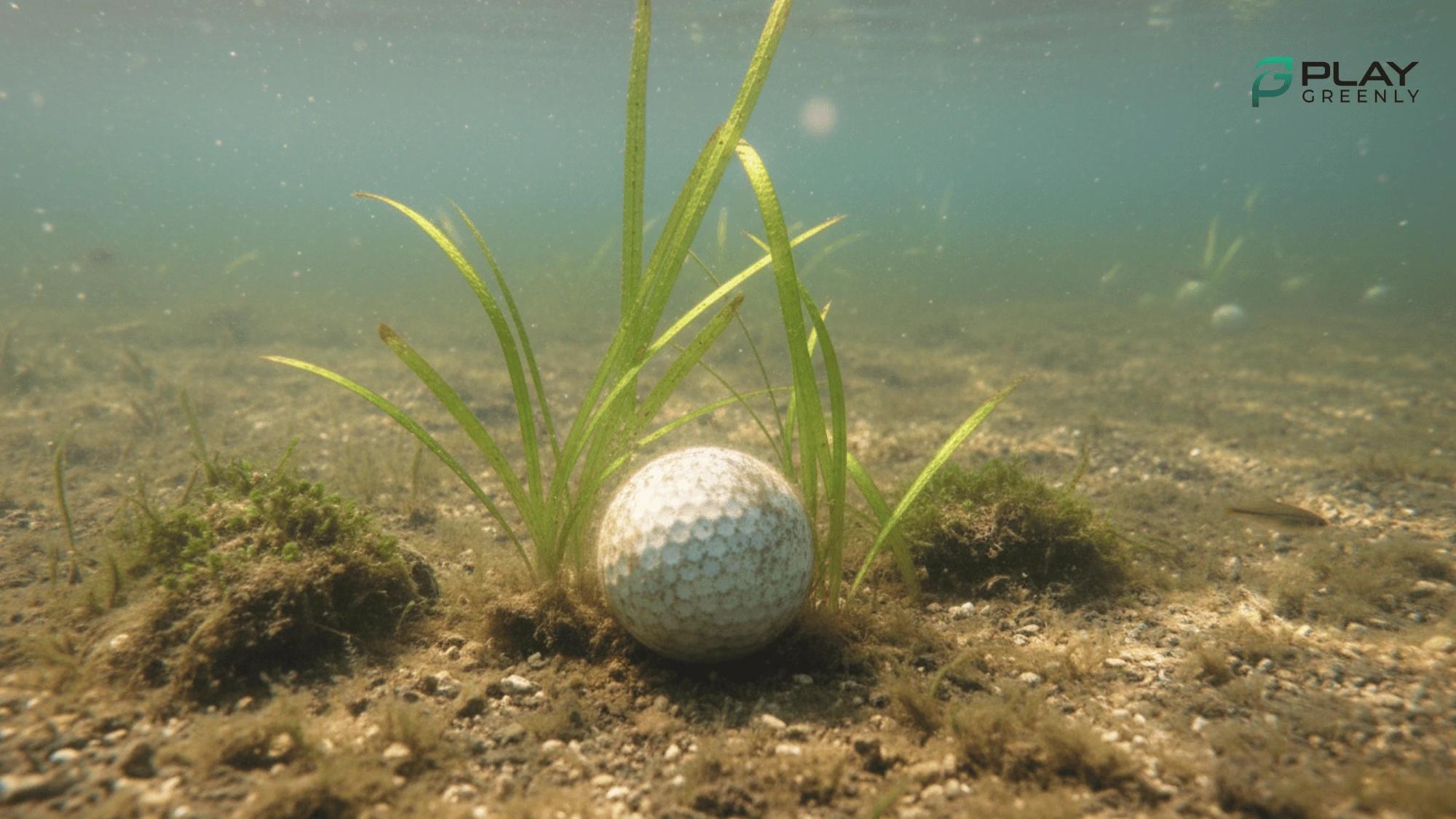
They Do Not Break Down Naturally
Traditional golf balls are typically made from an ionomer or urethane cover, synthetic rubber cores, and petroleum-based resins. These materials are engineered for durability, not environmental breakdown.
Research on plastic persistence in aquatic systems shows that most plastics do not disappear; they gradually fragment into smaller pieces over long time frames rather than decomposing safely.
Studies summarized by NOAA and Woods Hole Oceanographic Institution indicate that many common plastics can persist in marine and freshwater environments for hundreds of years under certain conditions.
They Accumulate Into Underwater Piles
This issue has been documented in real-world environments.
In coastal waters near Pebble Beach and Monterey Bay, California, local recovery efforts removed more than 50,000 golf balls from the seafloor over roughly two years, highlighting how quickly lost balls can accumulate in popular play areas.
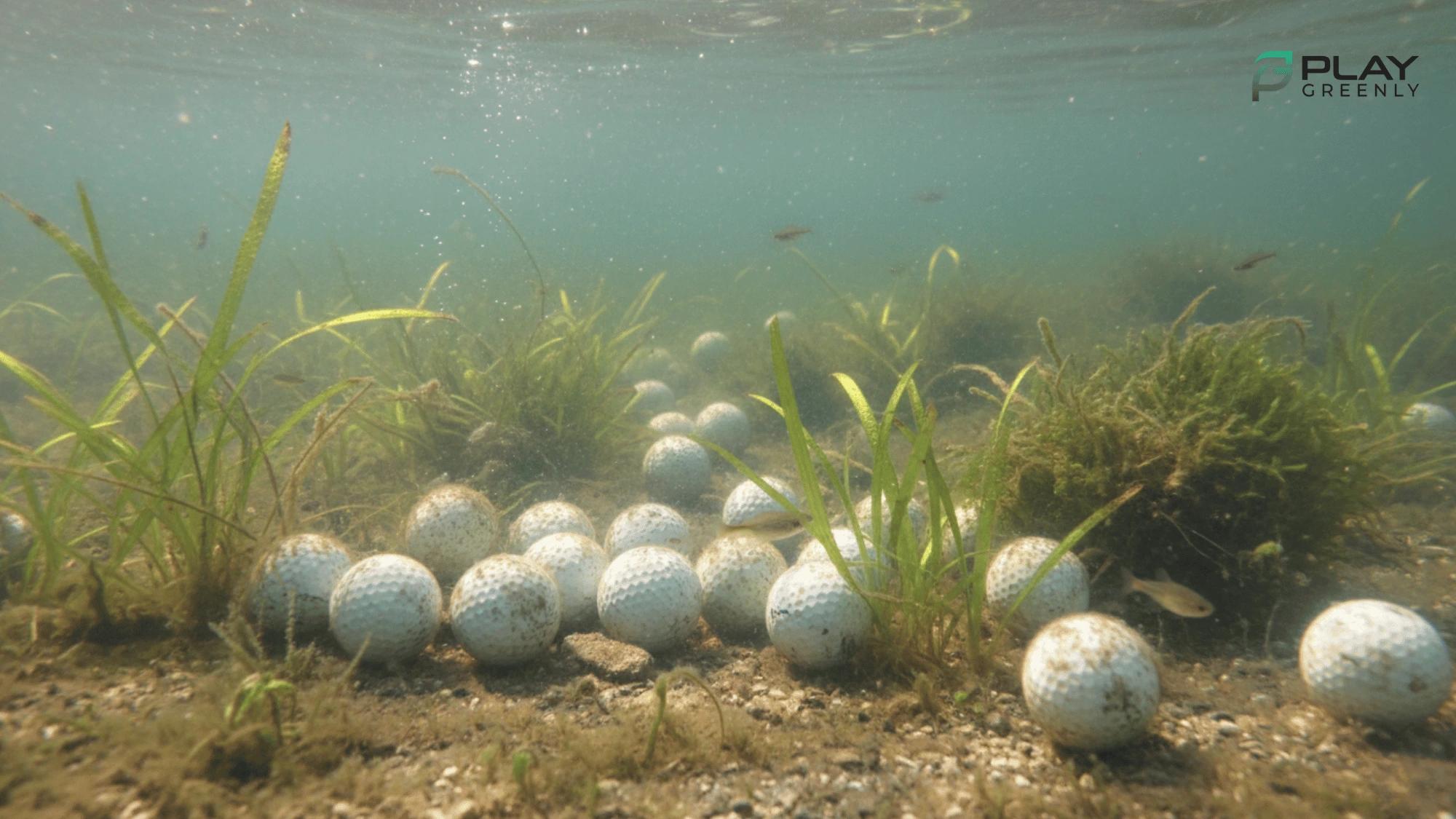
Accumulated golf balls underwater may:
- Disrupt sediment layers
- Reduce light penetration near the lakebed
- Introduce persistent foreign material into sensitive ecosystems
While a single ball may seem insignificant, repeated losses over years create concentrated debris zones beneath the surface.
They Release Microplastics Over Time
Even when a golf ball appears intact, its outer layers begin to fracture into microscopic plastic particles as the cover and core slowly weather.
This process can release microplastics; plastic fragments smaller than five millimeters into surrounding water and sediment.
According to NOAA, microplastics:
- Are commonly found in freshwater and marine environments
- Can be ingested by fish and invertebrates
- Tend to accumulate in sediments over time
The environmental concern is cumulative.
One ball is not the issue. Thousands lost over time create long-term ecological stress.
Once a golf ball enters a lake, it does not simply “go away.” Instead, it becomes part of a slow-building underwater accumulation that persists for years and gradually sheds plastic into the ecosystem.
Want to understand what actually happens underwater when a ball sinks?
Read: Can You Hit Golf Balls Into Lakes? (And What Happens Next)
Are Golf Balls Bad for Fish and Aquatic Life?
The primary risk is not fish swallowing whole golf balls.
The concern comes from plastic fragments and microplastics that gradually enter the ecosystem as submerged materials weather over time.
Related reading: Are Eco Golf Balls Safe for Fish and Oceans?
Microplastic Exposure Builds Slowly
Fish and aquatic organisms can encounter microplastics through:
- Sediment where particles settle
- Suspended fragments in the water column
- Nearshore areas where debris accumulates
Scientific studies indicate that microplastic ingestion may interfere with feeding behavior, energy balance, and early development in some aquatic species.
Cold Freshwater Extends Plastic Persistence
Lakes are generally colder than ocean environments for much of the year. Cold water slows chemical and physical degradation processes.
Environmental assessments from EPA’s Trash Free Waters program note that plastics often persist longer in cold freshwater systems, meaning submerged golf balls may degrade even more slowly in lakes than in marine environments.
As a result, plastic debris and microplastics can remain in freshwater systems for long periods once introduced.
Did you know?
Cold freshwater breaks down plastic far more slowly than ocean water — meaning golf balls in lakes may persist even longer. (EPA Trash Free Waters: plastic pollution)
Lost Balls Often Land Where Life Is Most Active
Casual water shots frequently target:
- Shallow shorelines
- Dock-adjacent water
- Near-bank zones where fish feed and spawn
This places long-lasting plastic materials directly into biologically active areas, increasing their potential ecological impact.
The issue isn’t a dramatic, immediate threat — it’s gradual exposure. Over time, persistent plastics and microplastics increase pressure on fish and aquatic ecosystems already facing multiple environmental stressors.
Why Do Golf Balls Keep Entering Lakes?
Most golfers are not ignoring the environment, they’re simply unaware of the long-term consequences.
It Feels Harmless in Recreational Play
Vacation rounds, casual lakeside swings, and backyard practice sessions create a relaxed mindset. The ball disappears from sight, and the moment quickly passes.
Scale Changes the Impact
While one lost ball seems trivial, scale tells a different story.
Industry estimates and academic references suggest that hundreds of millions of golf balls are lost annually worldwide.Some analyses estimate roughly 300 million balls lost per year in the United States alone, based on usage patterns reported in golf equipment and sports science publications.
Over time, these losses translate into substantial submerged plastic accumulation in lakes and ponds.
What feels insignificant at the individual level becomes meaningful when repeated millions of times, turning casual habits into long-term environmental pressure.
Did you know?
US recreational golfers lose roughly 300 million golf balls every year, contributing to long-term hidden waste in lakes and ponds. golfsciencejournal.org
Smarter Alternatives for Lake-Adjacent Play
For recreational water shots and casual practice, alternatives now exist that significantly reduce long-term environmental impact.
Dissolvable Golf Balls for Freshwater Use
Dissolvable golf balls are made from water-soluble or biodegradable materials designed to break down far faster than conventional plastic balls.
Public overviews and manufacturer-supported testing indicate that under controlled freshwater conditions, these designs can dissolve within days or weeks rather than decades.
Typical lab-based results often show:
- Majority material breakdown within the first week
- Near-complete dissolution within approximately 10–14 days
Actual timelines vary based on water movement, temperature, and composition.
Curious how performance compares?
Read: Biodegradable Golf Balls vs Conventional — What Really Performs Better?
No Persistent Plastic Residue
Because these balls are engineered to dissolve rather than fragment, they are not designed to leave behind durable plastic particles or long-lasting microplastics in sediment.
Verified Material Safety
Reputable manufacturers submit products for independent testing (such as SGS verification) to assess:
- Absence of detectable heavy metals
- Non-toxic dissolving behavior
- Environmentally safer material composition
Designed for Recreation — Not Competition
Dissolvable golf balls are not intended for tournament play or precision fitting. They are best suited for:
- Lakeside practice
- Dockside shots
- Vacation or backyard play
- Water-adjacent recreational use
For these scenarios, they offer a far lower environmental footprint.
For casual, water-adjacent golf, equipment choices now exist that allow enjoyment without adding long-term plastic waste to lakes.
Final Verdict: Are Golf Balls Bad for Lakes?
Traditional golf balls contribute to environmental harm in lake ecosystems by persisting underwater, shedding plastic fragments over time, and accumulating in biologically active areas.
Golfers do not need to stop playing near water.They simply need smarter equipment choices for recreational settings.
Biodegradable, dissolvable golf balls allow lakefront play without adding to long-term pollution.
Final Thoughts: Your Swing Can Leave a Cleaner Ripple
Golf is meant to be relaxing. Fresh air, open views, and calm water are part of the experience.
Choosing gear designed with freshwater environments in mind helps protect those spaces while keeping the game enjoyable.
Every ball is a choice.Some disappear naturally. Others remain for decades.
Play Better for the Planet
Explore lake-friendly golf ball designs created for recreational play near water.