“Fish-food golf balls” sounds catchy, but it blurs what eco-focused golf balls are actually for. This guide clears it up in plain English: what “ocean-safe” truly means (and doesn’t), how dissolvable (water-soluble) and biodegradable (non-soluble) designs behave in real conditions, and—most importantly—when paying a bit more makes sense. If you’re practicing from boats, at waterfront driving ranges, or running events near water where retrieval is difficult, eco-focused balls are a responsible tool to reduce long-term buildup compared with conventional balls. They’re not a tour-level performance upgrade; they’re a location-appropriate solution. Use them where permitted, store them properly (cool, dry), and prefer retrieval whenever you can. That’s the balanced way to “play greener” without changing your routine or making risky claims.
The myth in one sentence (and the real answer)
Myth: Eco golf balls are “fish food,” so it’s fine—even beneficial—to hit them into water. Reality: Golf balls, even eco-focused ones, are not wildlife feed. A few brands have marketed balls with fish-food cores, but that doesn’t make feeding fish a good practice. Messaging like “feed the fish” can normalize littering, ignore local regulations, and create the false idea that any ball in water is automatically helpful.
What to remember (quick facts):
- Dissolves in water ≠ edible. Water-soluble designs are formulated to break down after sustained exposure, not to be eaten.
- “Ocean-safe” means lower persistence, not permission to dump. It’s about reducing long-term buildup where retrieval is hard—always within site rules.
- Right tool, right place. Eco-focused balls make sense near water when retrieval isn’t realistic; inland or easily retrievable practice can stick with standard balls.
- Set expectations. Feel and spin are practice-oriented, not tour-ball; real-world behavior varies with temperature, salinity, and water movement.
What “Ocean-Safe” Means (and doesn’t mean)
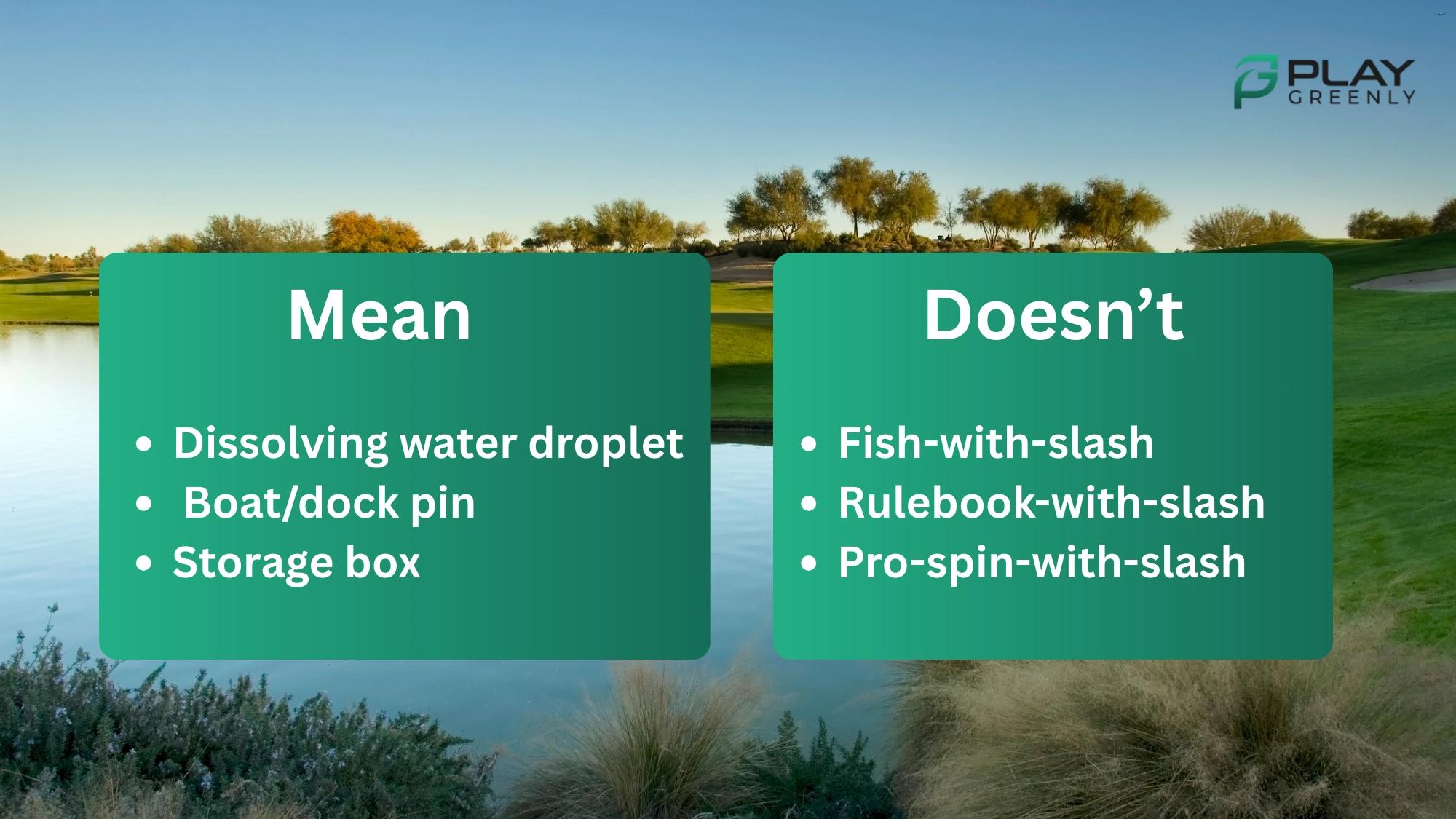
“Ocean-safe” means the ball is designed to reduce long-term persistence in the environment compared with a conventional ball when used responsibly near water. It doesn’t mean edible, it doesn’t mean “throw as many as you want,” and it doesn’t override local rules.
What it does mean
- Lower persistence vs. standard balls: Materials are engineered to dissolve in water over time (dissolvable types) or biodegrade more readily under suitable conditions (non-soluble biodegradable types).
- Right tool for tough locations: Best suited to boats, waterfront ranges, or events where retrieval is impractical.
- Responsible handling: Use within site policies, store cool and dry, and treat dissolution as a fallback, not the main goal.
What it does not mean
- Not wildlife feed: “Dissolves” ≠ “edible.” We never imply fish or wildlife should ingest any material.
- Not a blanket permission: If a marina, range, or municipality restricts water-soluble/biodegradable products, obey those rules.
- Not a performance upgrade: These are practice-oriented tools; don’t expect tour-ball feel or spin.
Quick examples (so it’s crystal-clear)
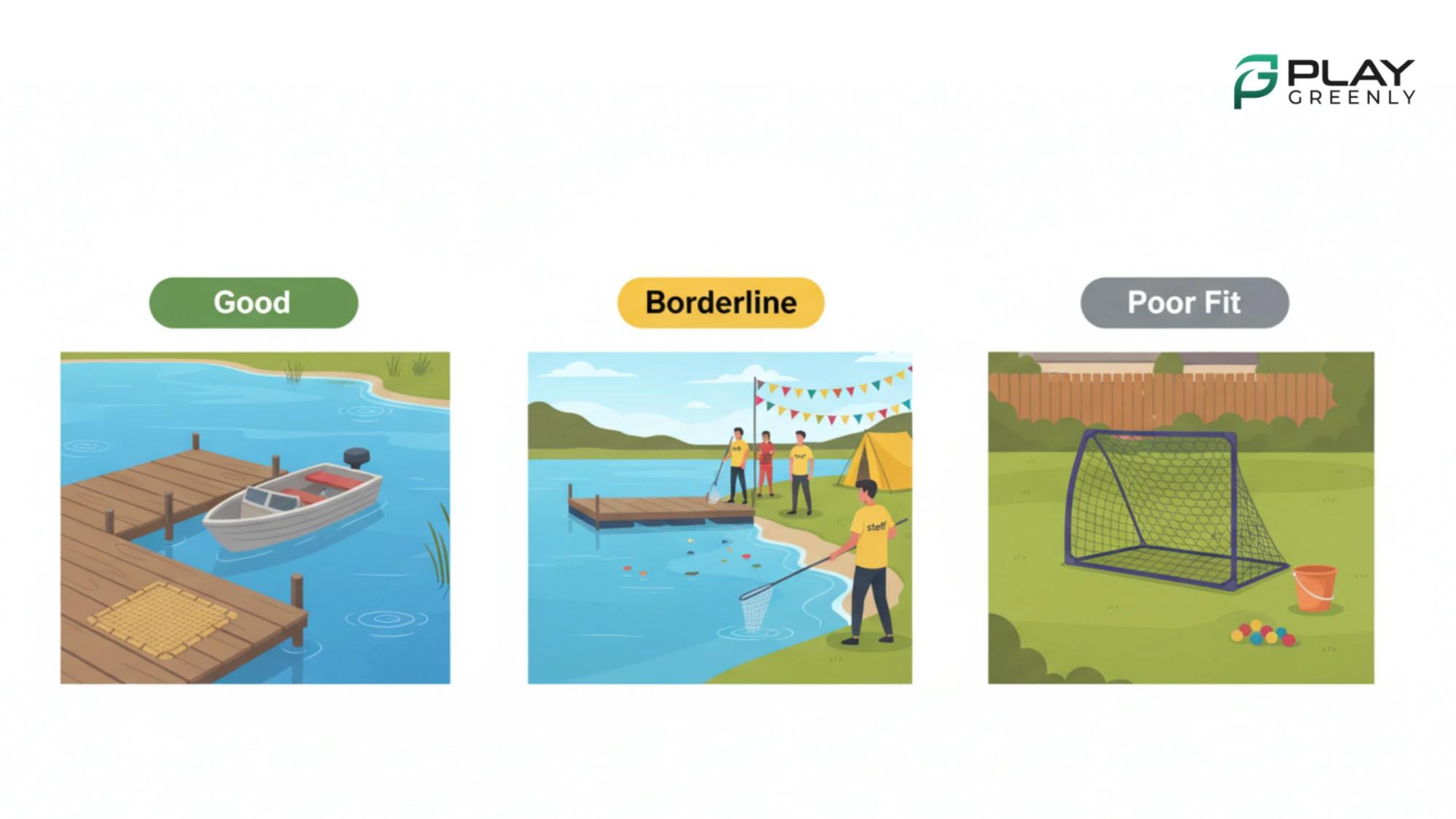
- Good fit: Hitting from a moored boat where retrieval isn’t realistic, and local policy allows eco-focused balls → choose dissolvable; keep session short.
- Borderline fit: Lakeside event with staff who can net/retrieve a portion of shots → use eco-focused balls and a retrieval plan.
- Poor fit: Backyard net, field practice, or any inland spot where balls are easily retrieved → just use standard balls.
Two-line microcopy you can reuse on site
- “Designed for responsible practice near water—reduces long-term buildup versus conventional balls when used as directed.”
- “Not wildlife feed. Always follow local rules and prefer retrieval when feasible.”
How They Behave in Water (Dissolvable vs Biodegradable)
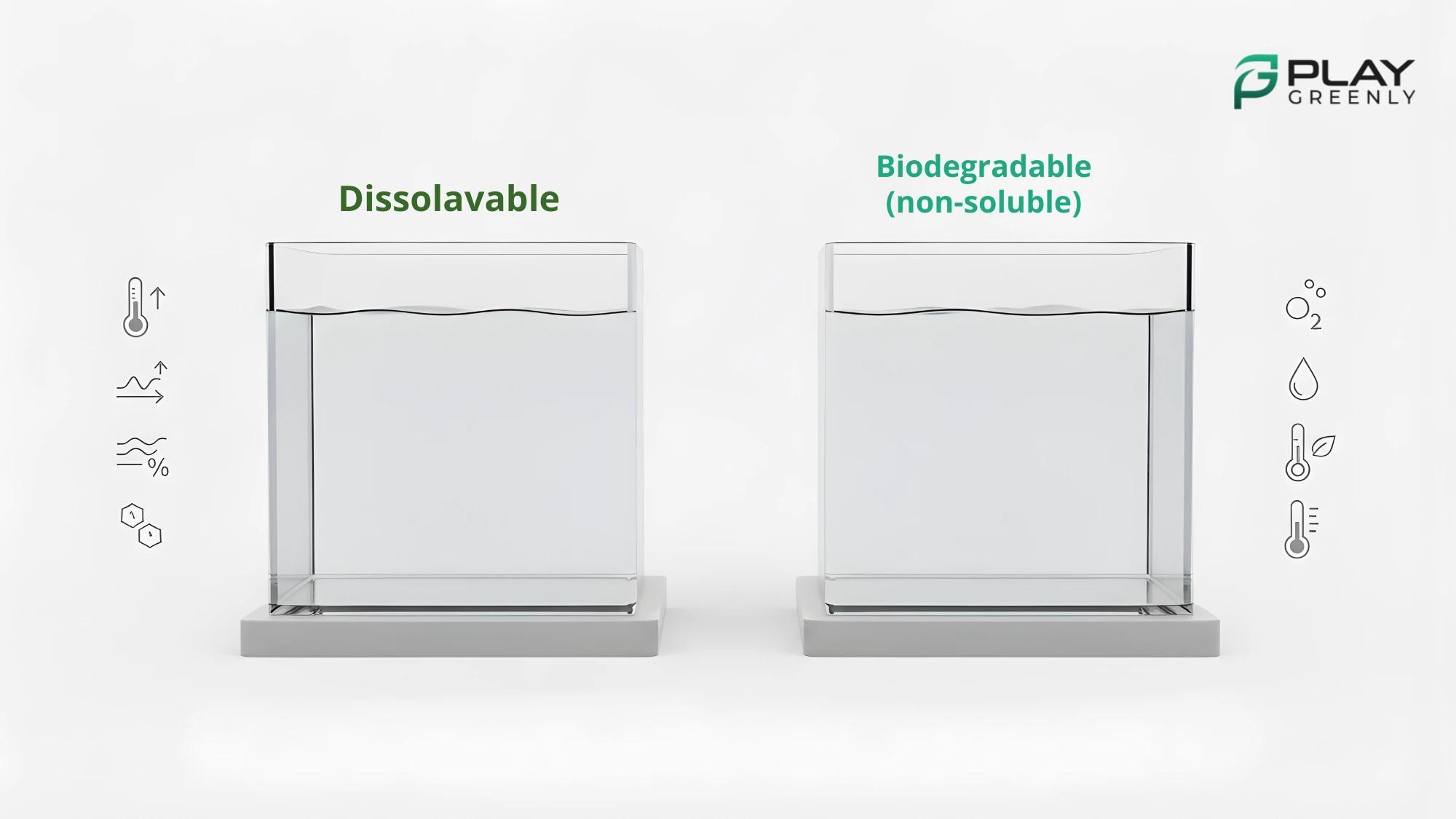
Dissolvable balls are designed to break down in water over time; biodegradable (non-soluble) balls are designed to break down more readily than conventional balls but aren’t engineered to dissolve on contact.
Dissolvable (water-soluble)
- What they do: Formulated so the outer material breaks down after sustained exposure to water.
- What affects the rate:
- Temperature: warmer water generally accelerates breakdown; colder water slows it.
- Movement: waves/current/agitation generally speed things up; still water slows it.
- Salinity & composition: local chemistry can influence behavior.
- Product design: different brands/formulations = different timelines.
- What to expect in use: Great for short practice sessions near water where retrieval is tough. Feel is practice-oriented, not tour-ball.
- Do / don’t:
- Do use where permitted, keep sessions controlled, and prefer retrieval when you can.
- Don’t describe them as food or imply wildlife should ingest anything.
Biodegradable (non-soluble)
- What they do: Designed to break down under suitable conditions over time; not intended to dissolve in water.
- What affects the rate: oxygen, moisture, temperature, and the specific formulation.
- What to expect in use: A lower-persistence option compared with conventional balls for sites that want an eco-focused choice—but still follow local rules and retrieval-first guidance.
- Do / don’t:
- Do store cool and dry; use responsibly in approved locations.
- Don’t treat “biodegradable” as permission to leave balls behind.
Quick examples (so it’s crystal-clear)
- Dissolvable is the better fit: practicing from a moored boat where nets aren’t practical and local policy allows water-soluble products.
- Biodegradable (non-soluble) is fine: an eco-focused event near water with staff supervision and retrieval where possible, within site rules.
- Neither is needed: backyard net or any inland spot where balls are easily retrieved—standard practice balls are the sensible choice.
Are Eco-Friendly Golf Balls Worth Paying For?
Short answer: Yes—when the use-case fits. If you practice from boats, waterfront ranges, docks, or event setups where retrieval is impractical, eco-focused balls are the right tool for the location. If you’re inland with easy retrieval, stick with standard practice balls.
Where the extra cost actually earns its keep
- Reduced long-term buildup vs. conventional balls: Designed either to dissolve in water (dissolvable types) or to break down more readily under suitable conditions (biodegradable, non-soluble types).
- Right-place utility: They let you keep training near water without pretending you can net every shot back.
- Policy alignment: Marinas, ranges, and event venues increasingly require responsible-use products; having the right ball type avoids friction and helps approvals.
- Clear messaging for your group: You can brief players with simple, accurate rules (“responsible practice near water,” “prefer retrieval,” “not wildlife feed”), reducing bad habits.
When paying more makes sense
- You’re hitting from a boat or dock, and retrieval is unrealistic.
- You run a waterfront range or event and want to minimize long-term accumulation while respecting site rules.
- You need a clean, defensible policy for staff/participants (e.g., signage, safety briefing, venue approval).
When it’s probably not worth it
- Backyard nets / inland fields / easy retrieval sessions—use standard practice balls and collect them.
- You expect tour-level feel and spin—eco-focused options are practice-oriented, not performance upgrades.
- Your location restricts dissolvable/biodegradable products—follow local rules first.
Set expectations (so no one feels misled)
- Purpose: location-appropriate, not a performance hack.
- Behavior varies by conditions: temperature, movement, local water chemistry, and product formulation all matter.
- Storage matters: keep cool and dry to preserve intended behavior until use.
- Ethics/compliance: “ocean-safe” ≠ edible; do not market or treat any ball as wildlife feed.
Quick decision checklist
- Are we practicing near water where retrieval is hard? → Yes
- Do local rules/policies allow eco-focused balls? → Yes
- Can we brief players on responsible use (short sessions, no “feed the fish” talk)? → Yes
- Do we accept practice-oriented feel (not tour ball)? → YesIf all four are yes → the upgrade makes sense.
Pros & Cons (Honest Snapshot)
Why this matters: setting expectations up front prevents disappointment and keeps your messaging compliant.
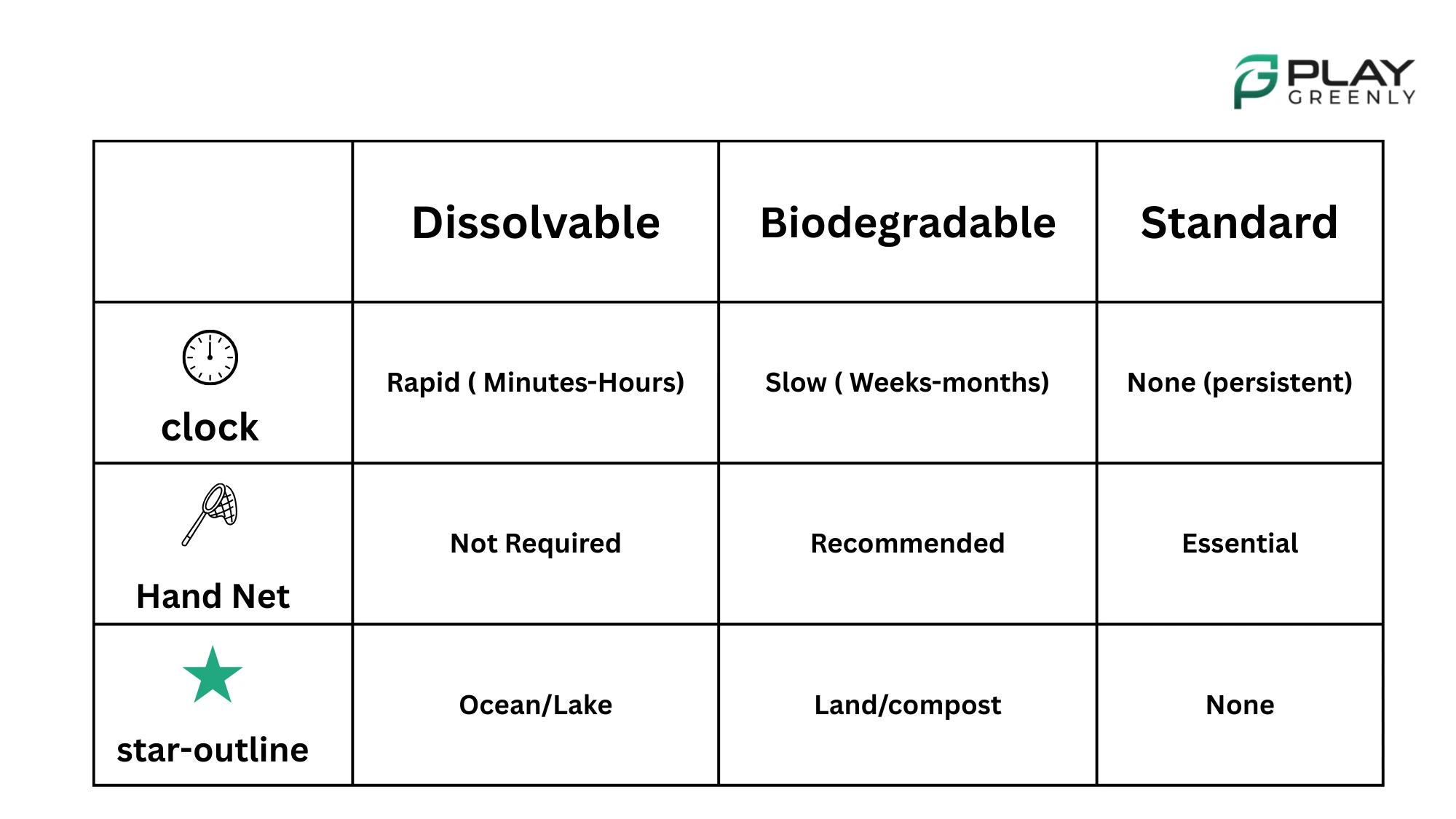
Dissolvable (water-soluble) balls
What you gain
- Practical for practice near water when retrieval is unrealistic (boats, docks, waterfront ranges, certain events).
- Designed to break down in water over time, reducing long-term persistence vs. conventional balls when used responsibly.
- Easy to brief: “responsible practice near water; prefer retrieval; not wildlife feed.”
What you trade
- Feel/performance: practice-oriented; not a tour-ball substitute.
- Condition-dependence: breakdown rate varies with temperature, water movement, salinity, and specific formulation.
- Policy sensitivity: must follow local rules; not appropriate everywhere.
Biodegradable (non-soluble) balls
What you gain
- Formulated to break down more readily than conventional balls under suitable conditions.
- Lower-persistence option for eco-focused sites that want a responsible alternative.
What you trade
- Not engineered to dissolve in water; still need responsible use and retrieval where feasible.
- Breakdown timelines vary with oxygen, moisture, temperature, and product design.
Standard (conventional) balls
What you gain
- Familiar feel and flight; widely available and often lowest cost.
- Ideal for inland practice and any session where you can easily retrieve balls.
What you trade
- Persistence: if left in the environment, they accumulate and don’t break down quickly.
- May not align with waterfront policies at marinas/ranges/events.
Responsible Use Near Water (Quick Guide)
Bottom line: these balls are a location-appropriate tool—use them where retrieval is hard, keep sessions controlled, and communicate the rules clearly.
For players (simple, practical steps)
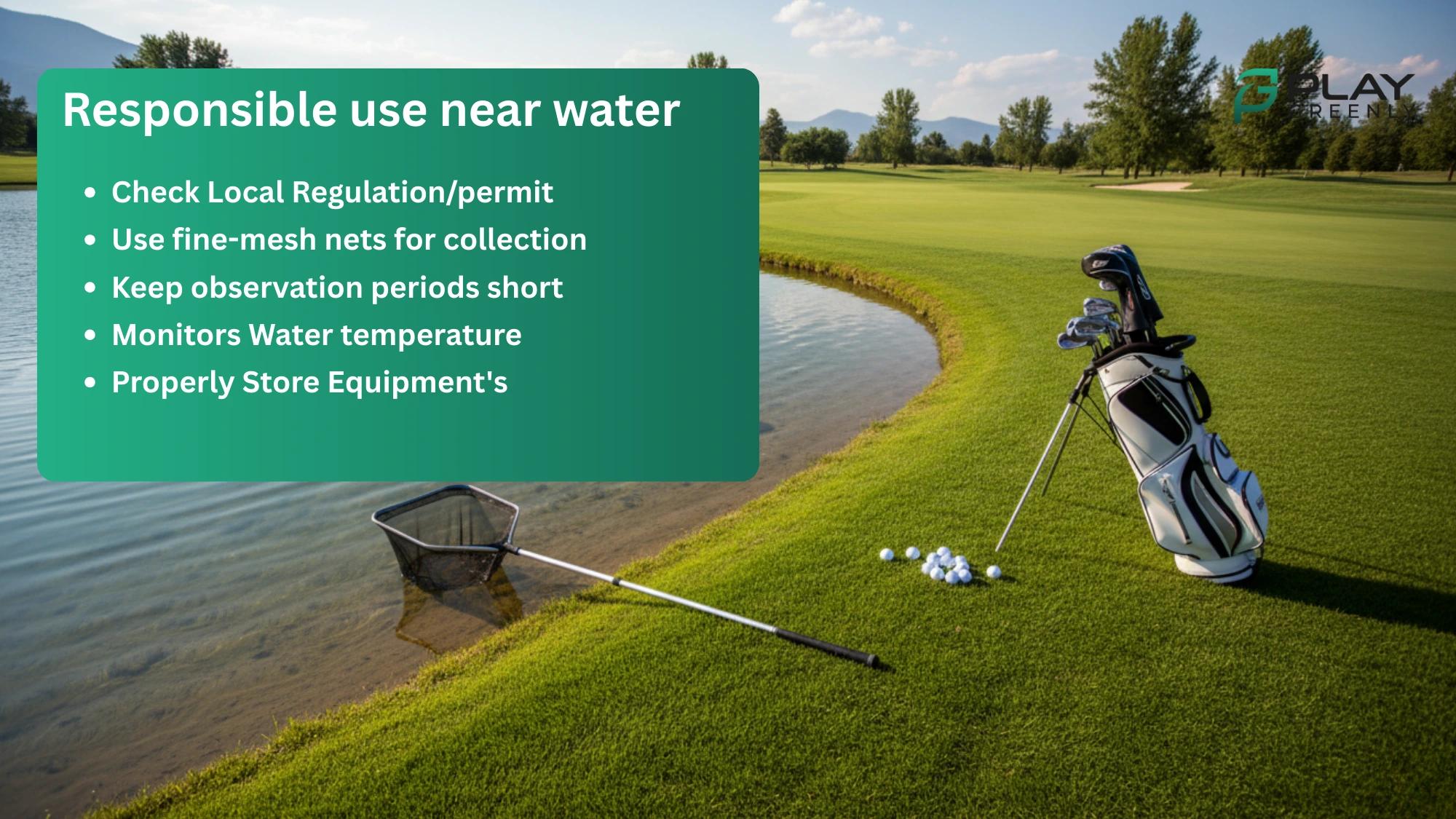
- Check permission first. Confirm the range/marina/event allows eco-focused balls; follow posted rules.
- Prefer retrieval. Bring a net or line if feasible. Treat dissolution/biodegradation as a fallback, not the goal.
- Keep sessions short. Aim for focused sets (e.g., 20–40 shots), not high-volume “spray and pray.”
- Pick the right type.
- Near water with minimal retrieval → dissolvable (water-soluble)
- Eco-focused on land or mixed settings → biodegradable (non-soluble)
- Mind conditions. Cold, still water slows breakdown; warm, moving water tends to speed it—adjust expectations.
- Store right. Keep balls cool, dry, out of sun until you play to preserve intended behavior.
- Never “feed the fish.” Don’t frame them as edible; avoid tossing extras “for nature.”
For venues & event hosts (policy and ops)
- Post a one-line rule.“Responsible practice near water only. Prefer retrieval. Not wildlife feed. Follow site rules.”
- Choose zones. Designate a hitting area that minimizes scatter; mark a safe aiming window.
- Brief the group.“These are for responsible practice near water. Keep sets short, retrieve what you reasonably can, and remember: not wildlife feed.”
- Have a retrieval plan. Keep a long-handle net on hand; assign a staff check between groups if practical.
- Log compliance. If you require eco-focused balls for specific bays/events, note it in booking confirmations.
- Stay consistent. Use the same language on signage, waivers, and staff scripts to avoid mixed messages.
Quick decision tree
- Near water & retrieval impractical? → Use dissolvable (if permitted) + short sets + brief the group.
- Near water & some retrieval possible? → Use eco-focused balls + retrieval net + short sets.
- Inland or easy retrieval? → Use standard practice balls and collect everything.
Microcopy you can reuse (for ribbons/signage)
- “Designed for responsible practice near water—reduces long-term buildup versus conventional balls when used as directed.”
- “Not wildlife feed. Prefer retrieval when feasible. Follow local rules.”