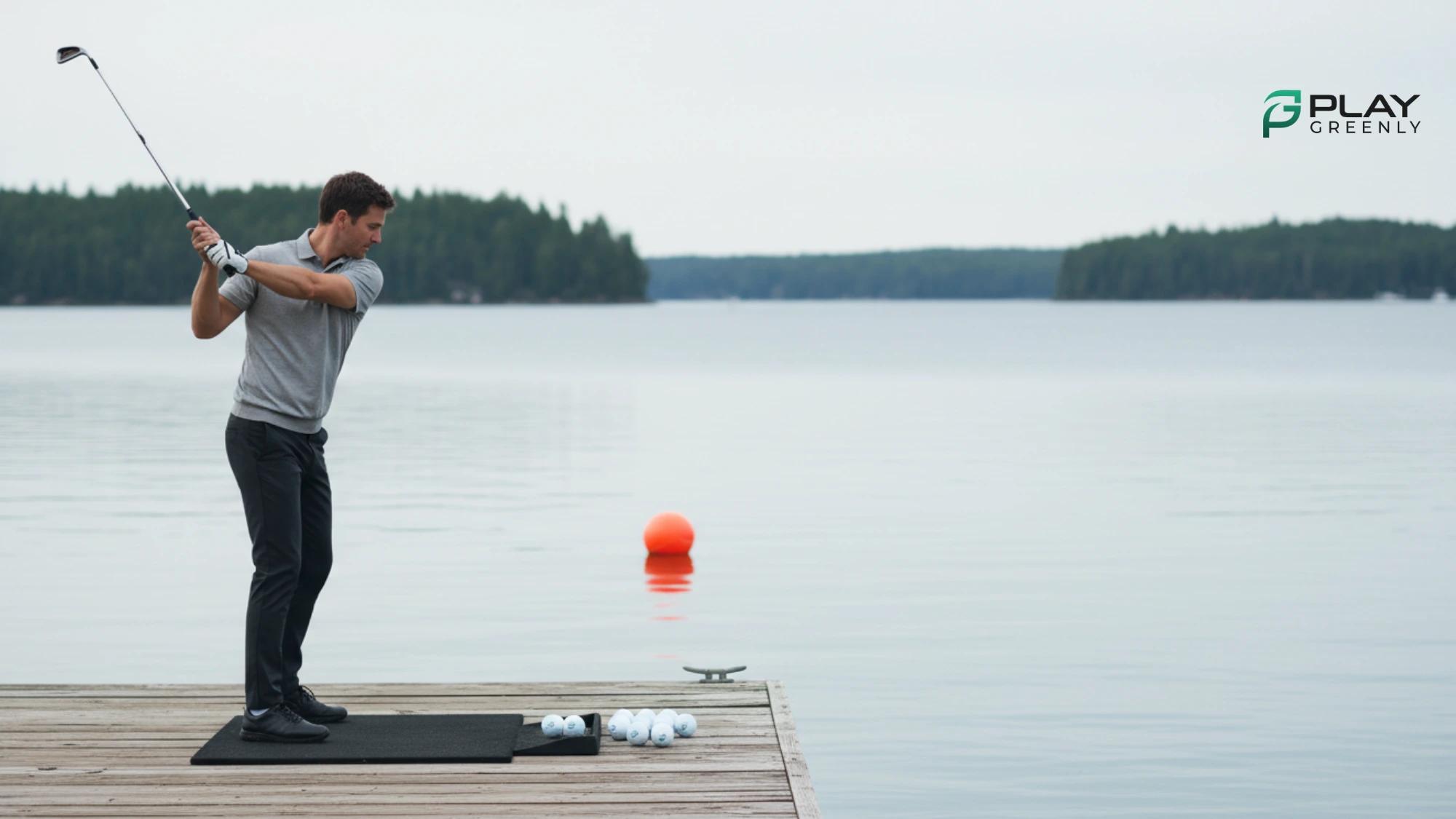
Intro: Practice Without Leaving a Trace—When It’s Allowed
The sun’s low, the dock is quiet, and you’ve got a few minutes before dinner. You want to take a handful of swings—without leaving plastic behind in the water.
Dissolvable (water-soluble) golf balls are designed for short, controlled recreational practice near water in private or explicitly approved settings, such as private docks or select marina environments—only where permitted. This guide explains how these balls work, when their use may be appropriate, how to set up a safe, limited session, and what to buy—through the same stewardship lens we apply across responsible recreational play.
This is not about routine disposal or replacing retrieval. It’s about intentional, low-impact practice in clearly defined situations.
This guide is not intended to replace driving ranges, support repeated daily marina practice, or encourage open-water play in sensitive coastal zones. Dissolvable golf balls are designed for short, controlled recreational sessions in clearly permitted areas—not for routine disposal or unrestricted use.
What Are Dissolvable Golf Balls—and How Do They Work?
Dissolvable practice golf balls are formulated to break down in water after sustained exposure, rather than persisting for years like conventional plastic-core balls.
Most rely on polyvinyl alcohol (PVA/PVOH) or similar water-soluble polymers. These materials are designed to disperse in water over time instead of remaining as intact debris. This behavior is well documented in polymer science literature describing PVA solubility mechanisms (Kuraray).
Important clarification on material references
All references to polymer manufacturers in this article are based on publicly available technical documentation describing general PVA/PVOH behavior in water. These companies do not endorse, certify, or evaluate any specific golf ball products.
Dissolution timing varies by environment and formulation, as explained below.
Materials: Why Formulation Matters
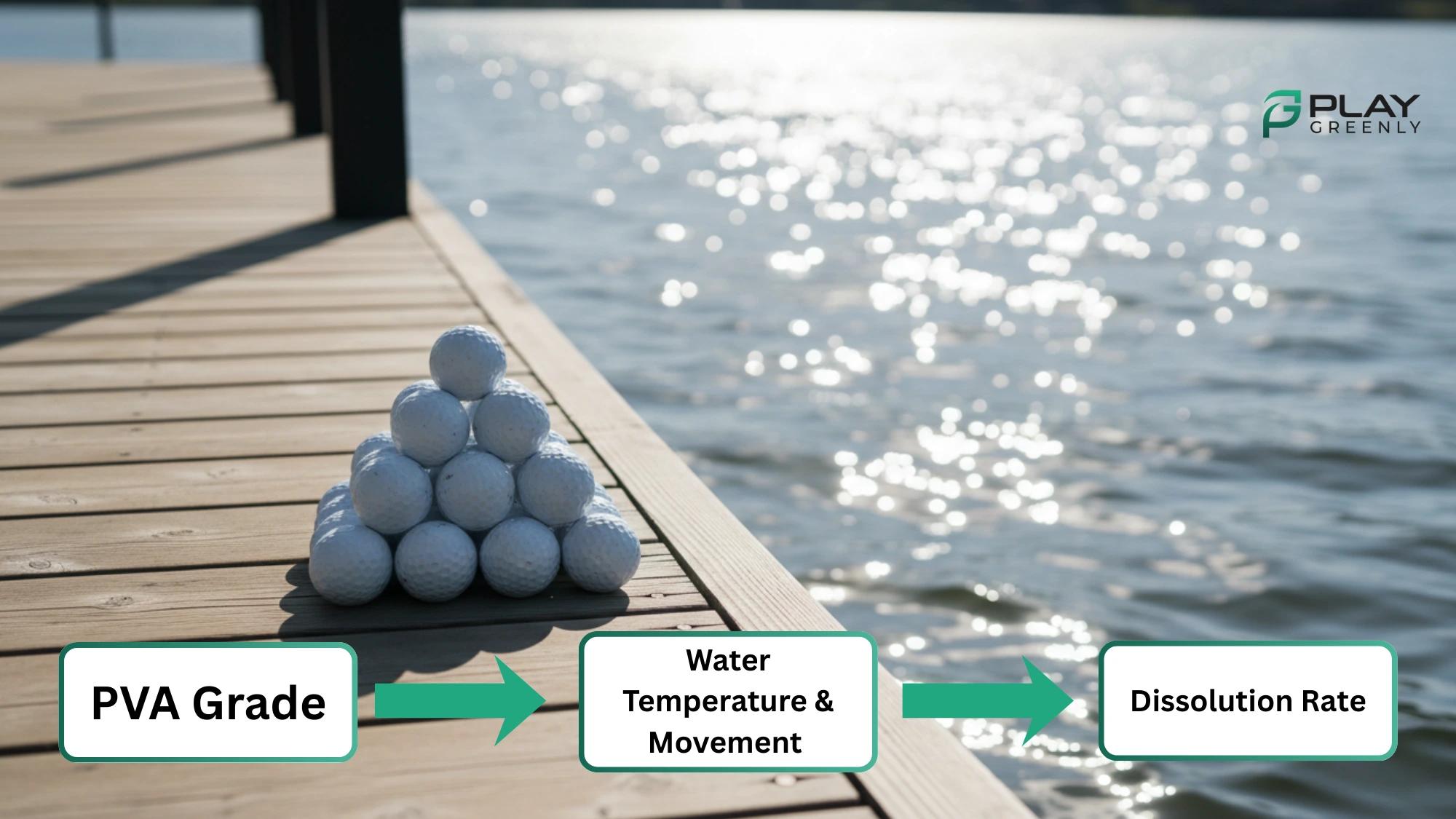
Most dissolvable practice balls use water-soluble PVA blends, but not all formulations behave the same.
Manufacturers choose different polymer grades because:
- Lower-hydrolysis grades tend to dissolve more readily, even in cooler water
- Higher-hydrolysis grades often require warmer temperatures and better mixing to fully dissolve
These distinctions are described in manufacturer material guides for PVA solution preparation (Kuraray; Sekisui). Because real-world water environments vary, there is no honest universal “time-to-dissolve” claim that applies everywhere.
These formulation differences affect how balls behave in real water conditions (see Why Dissolution Time Varies).
Why Dissolution Time Varies (and Why Fixed Claims Are Misleading)
Dissolvable golf balls do not break down on a fixed schedule. Dissolution speed varies based on three material factors:
- Water temperature
- Water movement or agitation
- Polymer formulation
In warmer, moving water, dissolution occurs more quickly. In colder or still conditions, the process slows significantly.
In many formulations, water-soluble polymers soften and fragment before fully dispersing at a molecular level. This intermediate phase reinforces why retrieval remains the preferred outcome whenever feasible, with dissolution serving as a fallback rather than the intended disposal method.
This variability is inherent to water-soluble polymers such as PVA/PVOH and is described in publicly available polymer technical documentation. Because real-world water conditions are never identical, there is no honest or universal “time-to-dissolve” claim that applies across all environments. Any fixed timeline should be treated as illustrative—not guaranteed.
Did you know?Polymer technical data commonly states: “The higher the water temperature, the quicker the rate of dissolution.” This is a material property—not a marketing promise.
Dissolvable vs. Traditional Golf Balls Near Water
Traditional golf balls use plastic shells and rubber cores designed for durability. When lost in water, they can persist for decades.
Dissolvable golf balls, by contrast, are designed for limited recreational practice where retrieval may be difficult—but not as a substitute for responsible use or recovery.
Key distinction:
- Traditional balls = long-term persistence
- Dissolvable balls = short-session mitigation tool, not routine disposal
They reduce persistence risk but do not eliminate the need for thoughtful use.
Are Dissolvable Balls Appropriate at Docks and Marinas?
Sometimes—only when permitted, and only when used responsibly.
Many docks, marinas, and waterfront communities restrict all hitting activities, regardless of ball type. Always confirm with:
- Marina management
- HOA or property rules
- Posted signage or local policies
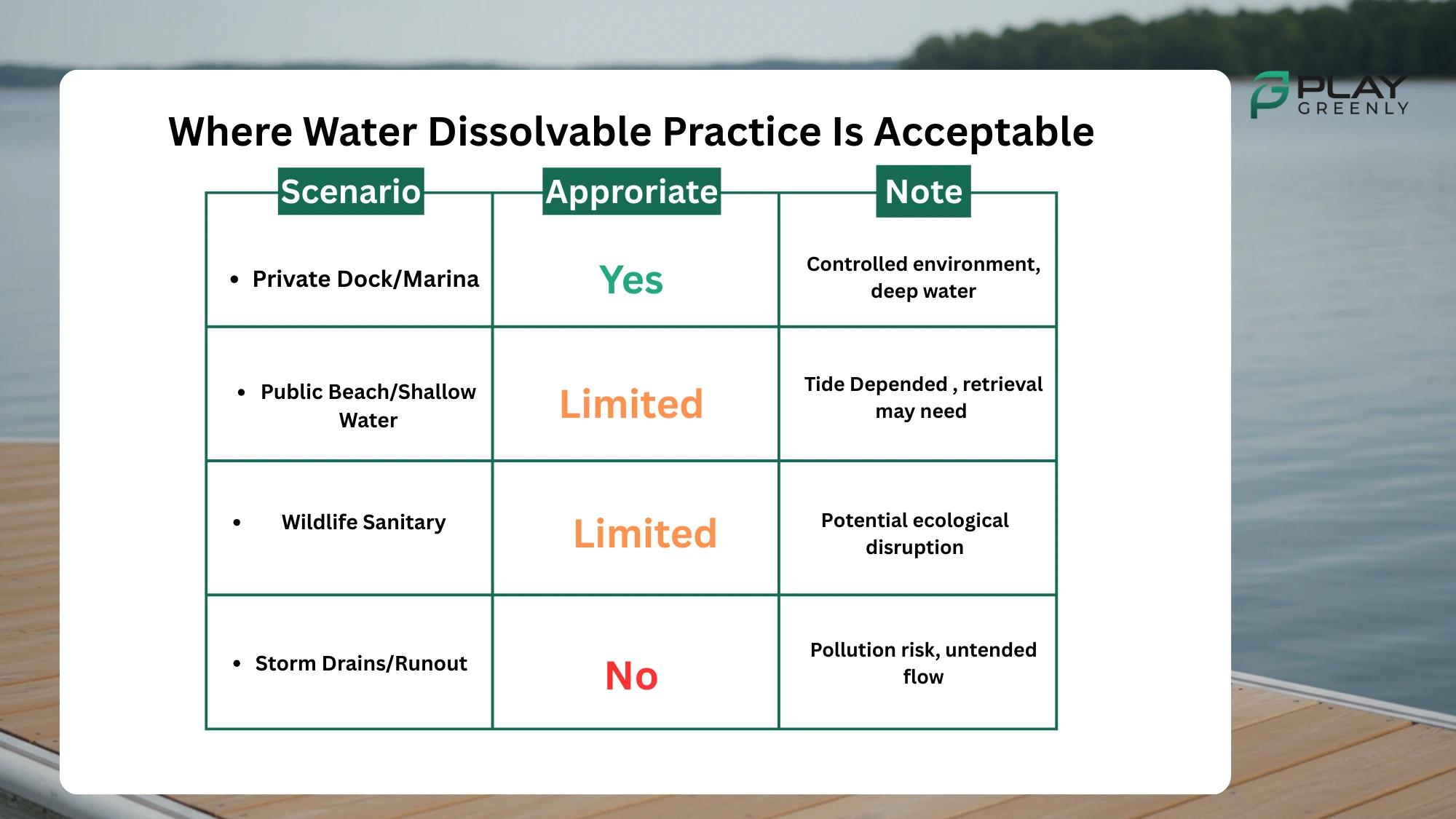
Even when permitted, dissolvable balls should be treated as a controlled drill, not casual or repeated dumping.
Coastal programs like the NOAA Marine Debris Program exist to prevent debris from entering or accumulating in waterways. That same prevention mindset should guide any dock or marina practice: short sessions, defined lanes, small quantities, and retrieval whenever feasible.
Dissolvable balls are not intended for routine marina use or repeated disposal into tidal waters.
If your dock, marina, or private waterfront explicitly allows limited practice, the next step is understanding how to run a short, safe session without creating conflict or unintended impact. The setup and usage guidelines below are designed to keep practice controlled, predictable, and compliant.
What “Responsible” Looks Like in Practice
Before hitting:
- Confirm the activity is explicitly permitted
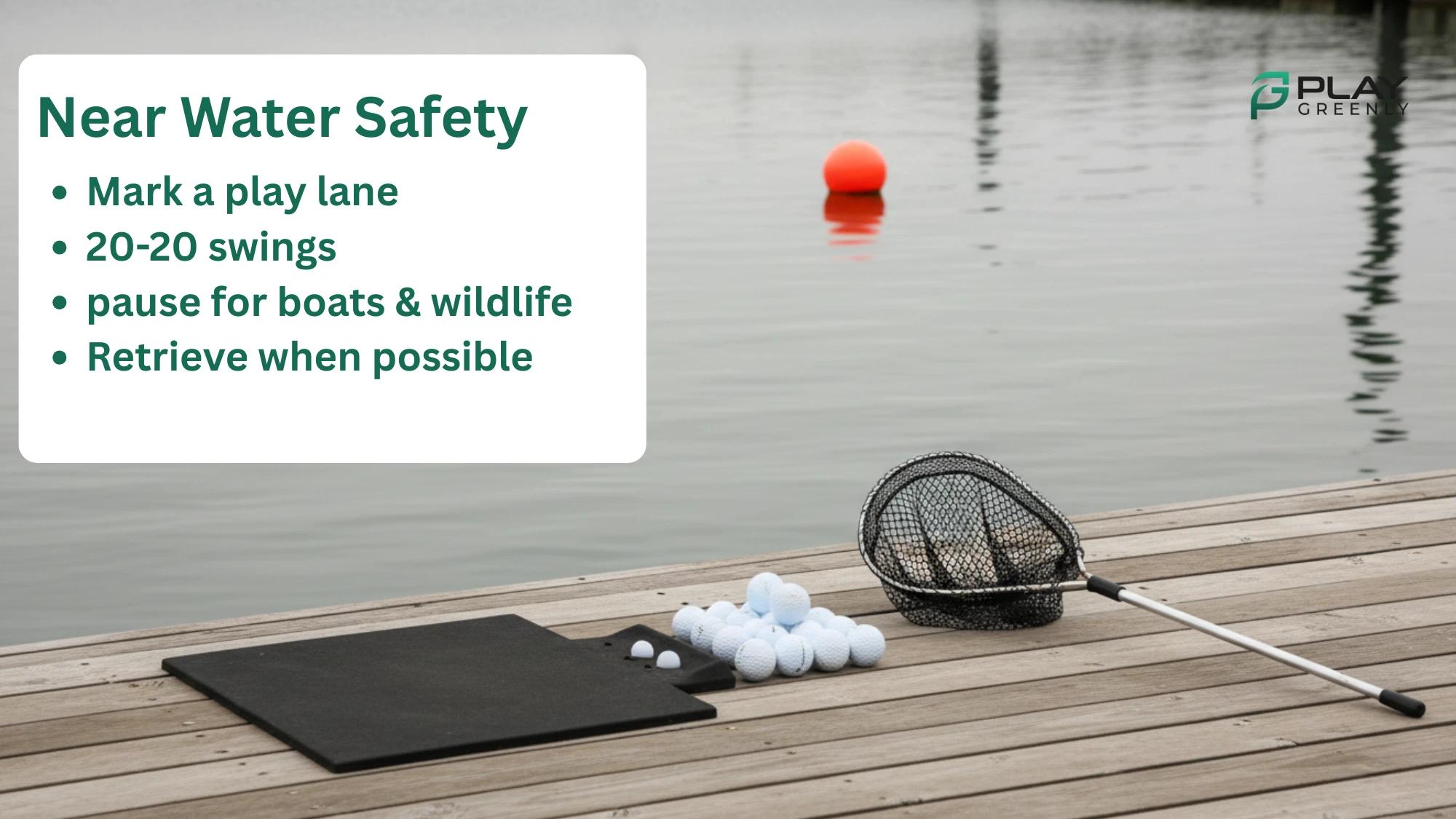
- Define a specific play lane
- Set a clear ball limit (commonly 10–20 swings)
For group demos or clinics, written permission from marina or HOA management keeps expectations aligned.
Avoid aiming anywhere near:
- Swimmers or paddlers
- Active slips or channels
- Wildlife movement zones
If a boat, person, or animal enters the lane, play stops immediately.
Pro tip:Post a simple rule card:
Stay in the lane • 10–20 swings • Pause for boats & wildlife
Visible rules dramatically reduce misunderstandings and risk.
How to Set Up a Safe Dock Session
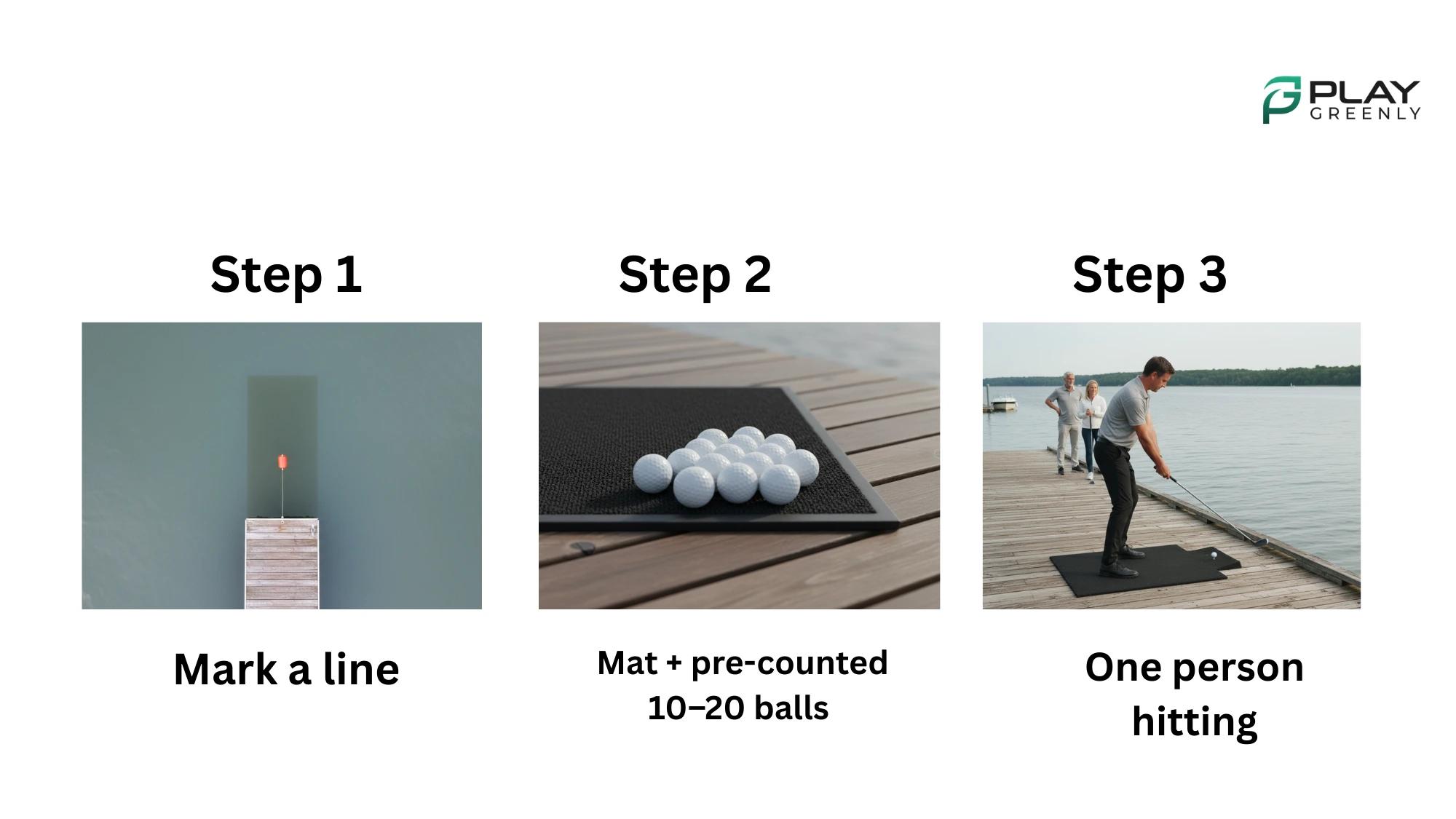
Step 1: Mark a Play Lane
Place a small buoy or float 20–30 yards out and aim into that corridor—away from slips and foot traffic. A visual target narrows dispersion and keeps practice contained.
Step 2: Use a Mat and a Small Batch
A compact tee mat protects the dock and reinforces short, focused sessions. Pre-count 10–20 balls; scarcity prevents overuse.
Step 3: Establish Ground Rules
One person hits at a time. Others stand behind the mat. If a boat, bird, or swimmer enters the lane, you stop—no exceptions. The goal is a tight five-minute routine that respects the water and everyone on it.
Did you know?Keeping an informal log of session counts helps if a community board or marina asks how you manage impact.
Performance Expectations (No Hype)
These are practice-oriented balls—not tour-spec equipment.
Expect:
- Solid feel for tempo and swing work
- Basic, predictable flight
Do not expect:
- Multilayer construction
- Advanced short-game spin
- On-course performance replacement
Store unused balls cool and dry, out of heat and direct sunlight. The same temperature sensitivity that enables dissolution can also degrade material during improper storage.
Buying Guide: What to Choose for Docks & Marinas
- Casual private dock sessions:A 24–48 pack, paired with a mini mat and buoy target, is usually sufficient.
- Marina demos or clinics:A 96-pack, posted rules, and short hitter rotations help keep sessions orderly and compliant.
- Yacht kits or gifts:A contained bundle (balls + mat + buoy + simple scorecard) looks polished and reinforces responsible use.
Pro tip:Match pack size to session length. Right-sized orders prevent “because we have them” overuse.
Responsible Use & Disposal Checklist
- Use only where explicitly permitted
- Practice in a clearly marked lane
- Keep sessions short—think “drill,” not “range bucket”
- Retrieve whenever possible; dissolution is a fallback, not the plan
- Store unused balls cool and dry
Learn end-of-life basics and retrieval best practices → /golf-ball-disposal/
What About “Ocean-Friendly” or Similar Claims?
You may see phrases like “ocean-friendly” or “marine-safe” in product marketing. Treat those as product-specific positions, not universal permission.
Local rules always govern use, and coastal prevention principles still apply: keep quantities modest, activities controlled, and pressure on sensitive waters as low as possible.
No water-soluble golf ball is exempt from local marine debris or pollution rules.
If you’ve confirmed permission and want a responsibly sized set for short dock sessions, here are responsibly sized sets designed specifically for short, permitted dock sessions.