Quick Answer
Do not hit ordinary golf balls into a lake and leave them there. Treat that as litter risk unless the property owner and local rules clearly allow the activity and the setup uses a purpose-made practice ball. Play Greenly makes PVA-based, water-soluble practice golf balls built for the ocean and other bodies of water, including lakes, rivers, ponds, docks, and marinas, but the product is not fish food, not a tournament ball, and not a permit to hit anywhere.
Start With Permission
The first decision is not whether a ball floats, sinks, or dissolves. It is whether the water, shoreline, venue, and surrounding people can safely and legally support the activity.
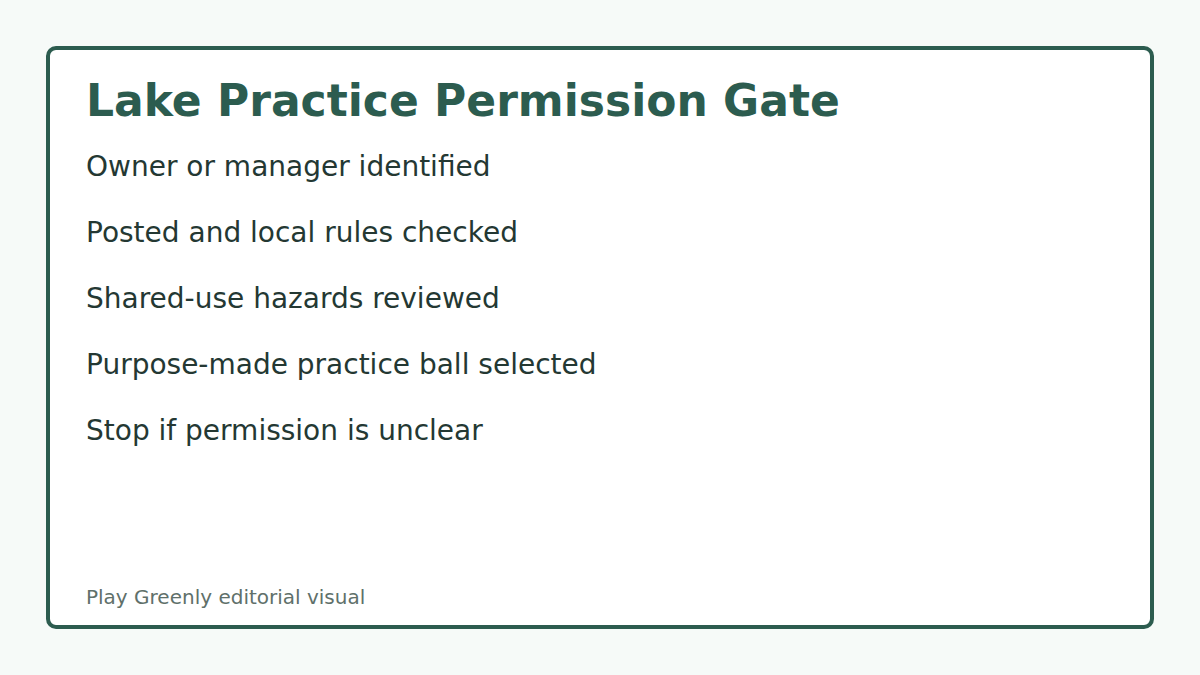
Ask three questions before anyone swings:
- Who owns or manages the water access?
- Does that owner or manager allow golf-ball hitting at this spot?
- Are there posted, municipal, course, marina, HOA, park, wildlife, boating, or event rules that restrict it?
If the answer is unclear, do not hit balls into the water. A product attribute cannot grant permission.
Why Ordinary Golf Balls Do Not Belong in Lakes
Ordinary golf balls are designed to survive hard club impact and long outdoor play. That durability is useful on a course, but it is a problem when balls are intentionally left in water.
EPA's Trash Free Waters program treats garbage in U.S. rivers, lakes, streams, and creeks as aquatic trash, and emphasizes reducing trash entering waterways. National Park Service Leave No Trace guidance uses the same practical discipline for outdoor recreation: pack out trash and leave places as you found them.
For a lake shot, the plain-language rule is simple: if a ball is not designed and permitted for that water-practice use, do not leave it behind.
Where Water-Soluble Practice Balls Fit
Play Greenly's approved product line is specific: PVA-based, water-soluble practice golf balls designed to reduce long-term persistence compared with conventional golf balls. They are built for the ocean and other bodies of water: lakes, rivers, ponds, docks, and marinas.
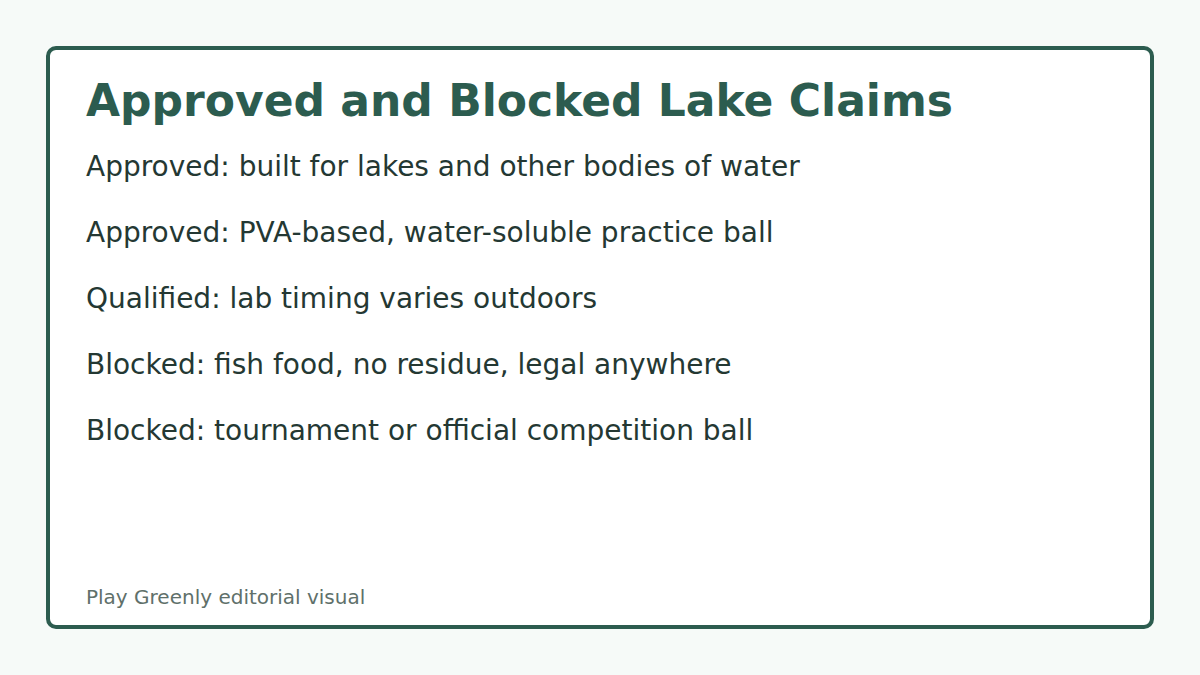
That is a use-case and product-positioning claim, not a blanket environmental certification. A supplier lab simulation of slow-moving fresh water reported about 90% dissolution by day 7 and complete dissolution by day 10 under controlled conditions: 10-20 C, 300 rpm stirring, and 1.5 L water changed daily. Real water conditions vary with temperature, movement, salinity, storage, and ball condition.
Use them only in private or approved settings and follow local rules.
A Safer Lake-Practice Checklist
Use this sequence before a waterfront practice activity:
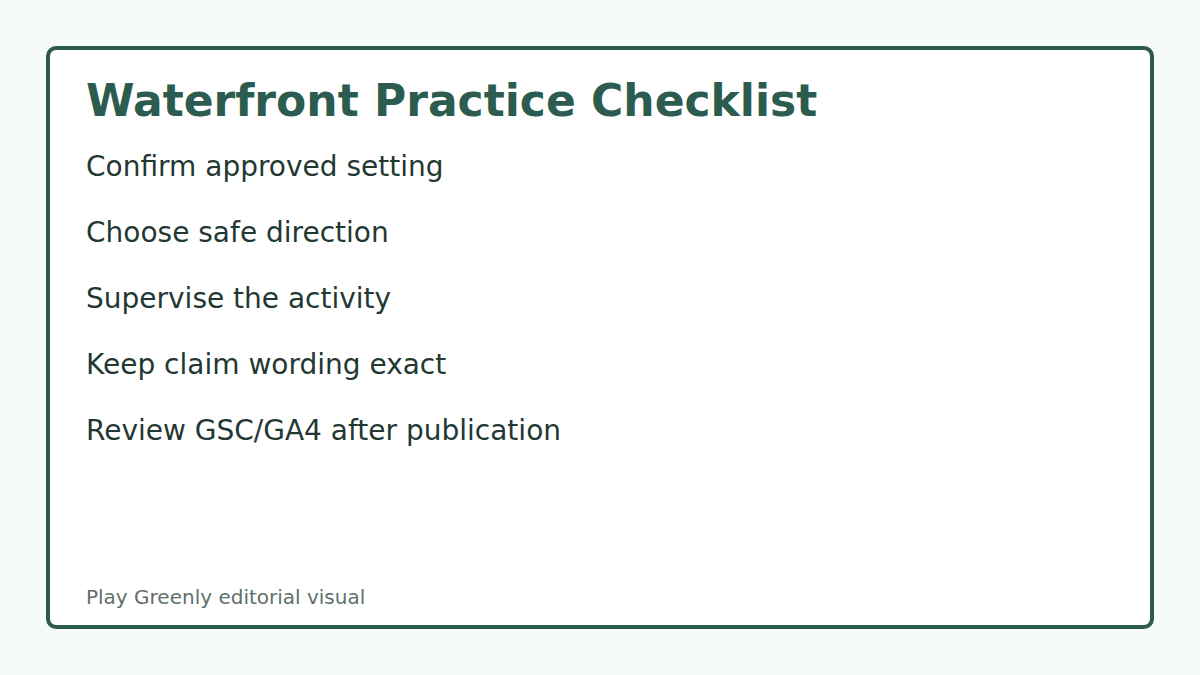
- Confirm the exact owner or manager of the water access.
- Check posted and local rules before setup.
- Choose a hitting direction with no boats, swimmers, pedestrians, wildlife conflict, or shared-use hazard.
- Use only a purpose-made practice ball for the intended setting.
- Keep packaging and claim language nearby so helpers do not improvise unsupported claims.
- Avoid feeding, wildlife, fish-safe, no-impact, no-residue, legal-anywhere, or tournament claims.
- Keep the activity small enough to supervise.
- Stop if conditions, venue rules, weather, crowding, or complaints change.
What Not to Say
Avoid these phrases unless separate evidence and legal review support the exact statement:
- legal to hit anywhere;
- fish-safe or fish food;
- edible;
- leaves no trace;
- zero impact;
- marine biodegradable;
- microplastic-free;
- no residue;
- tournament conforming;
- guaranteed to disappear in every lake.
Better wording is narrower: "water-soluble practice balls for approved water-practice settings," "built for lakes, rivers, ponds, docks, marinas, and the ocean," and "lab dissolution timing varies in real water."
Tournament and Rules Boundary
Play Greenly water-soluble balls are practice balls. Do not describe them as tournament balls or official-competition balls. R&A and USGA equipment resources define formal ball-conformance routes and list tested conforming balls. A waterfront novelty or practice session should not be presented as official play.
Frequently asked questions
Is it illegal to hit golf balls into a lake?
It depends on the place and rules, so check the property owner, local rules, and posted restrictions. If permission is unclear, do not hit balls into the water. This article is not legal advice.
Are water-soluble balls safe for lakes?
Play Greenly balls are approved brand/use-case language as safe for the ocean and other bodies of water, including lakes. That does not mean they are fish food, a legal permit, or certified marine biodegradable.
How long do Play Greenly balls take to dissolve?
A supplier lab simulation reported about 90% dissolution by day 7 and complete dissolution by day 10 under controlled slow-moving fresh-water conditions. Real water varies, so do not promise that exact timeline outdoors.
Can fish eat them?
No. Do not feed them to fish or wildlife, and do not call them edible or fish-safe.
Can I use them in a golf tournament?
No. Treat them as practice or novelty balls, not official-competition balls.