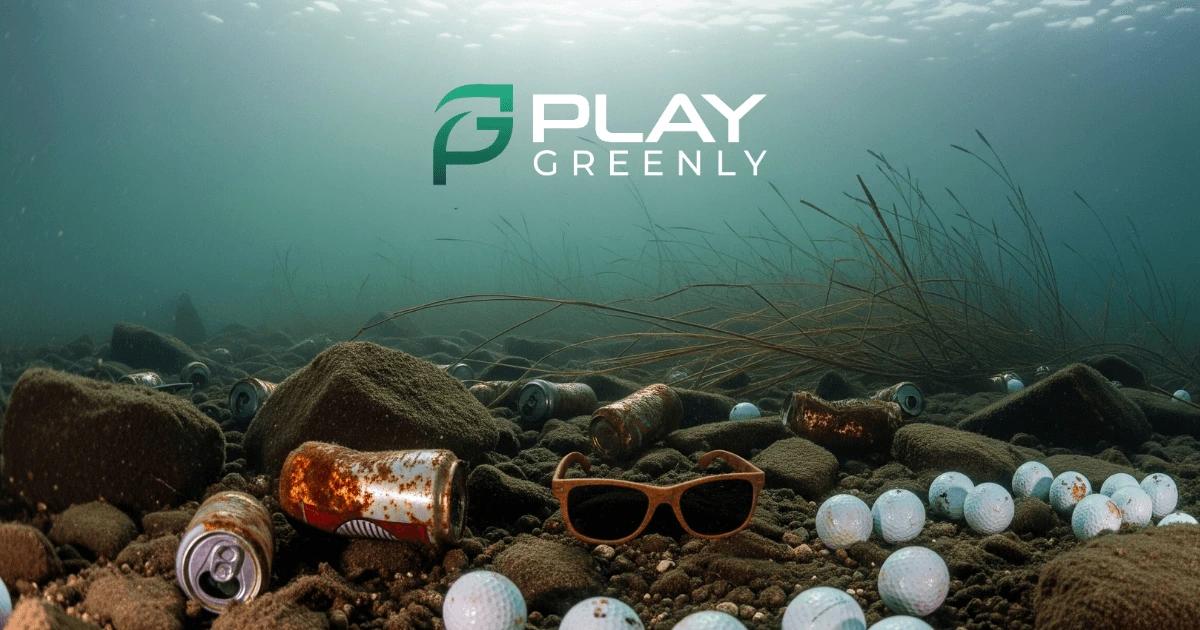
If you've ever seen a diver's footage from the bottom of a lake or ocean cove, you know it's not just fish and coral down there. Among the rocks and reeds? Lost sunglasses. Rusted beer cans. And, surprisingly often, golf balls — hundreds of them.
The problem? Most of those balls are built to survive a hundred rounds of golf… and end up surviving centuries underwater. They don't dissolve. They don't vanish. They sit there, leaching microplastics and chemicals into the same water that marine life depends on.
Eco-friendly golf balls promise a different story. But promises are cheap — the real question is: do they keep fish and ocean life safe?
To answer that, we have to pull back the curtain on what they're made of, how they break down, and what's left behind when the game is over. And the answers might not be what you expect.
The Problem with Conventional Golf Balls in Water
If you've ever sliced a ball into a lake during a round, you might have laughed it off with, "Well, that one's gone forever." Unfortunately, that's not just a figure of speech — it's literal.
1.1 Why They Don't Break Down
A standard golf ball is engineered to be practically indestructible. Its rubber core is wrapped in a tough thermoplastic shell designed to withstand swing speeds over 100 mph, heavy club impacts, and years of storage in a golf bag. Drop it in a pond or the ocean, and those same "durable" qualities turn it into a tiny, long-term pollutant.
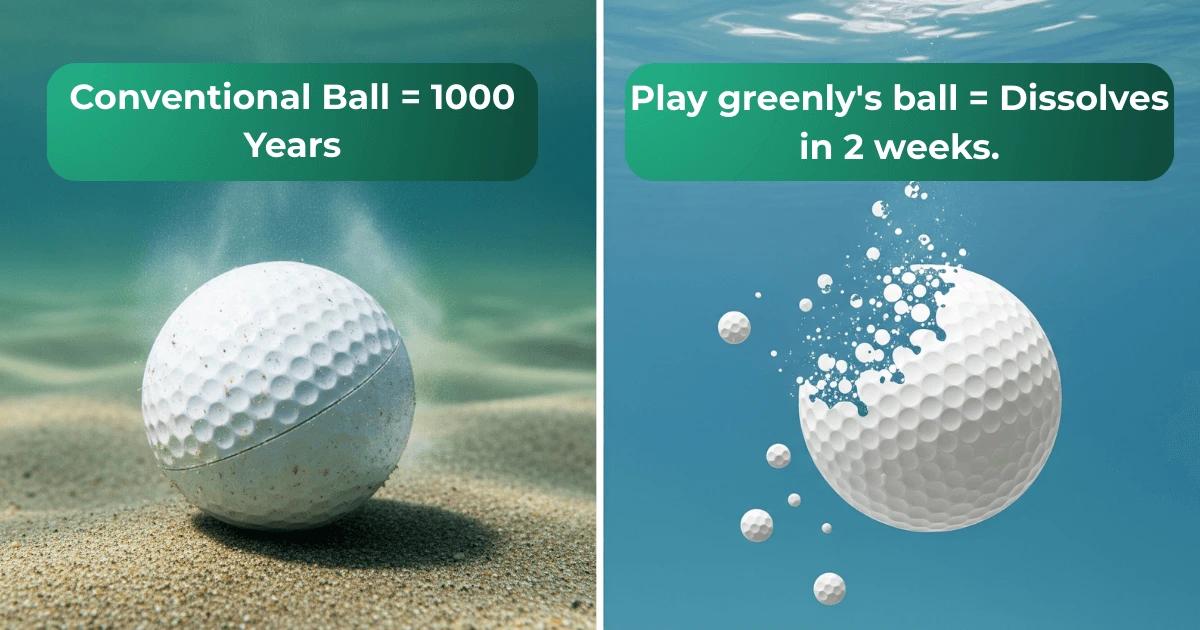
Studies show conventional balls can linger for hundreds of years without breaking down. Sunlight can't reach them underwater, waves don't wear them down, and microorganisms ignore them like they're rocks. They don't dissolve. They just sit there — indefinitely.
Curious what's inside those long-lasting balls? We covered it in detail here: What Are Biodegradable Golf Balls Made Of?
1.2 Microplastics and Hidden Pollution
The bigger issue isn't the ball you can see. It's the tiny particles you can't.
Over time, water movement and abrasion can cause the outer layer to shed microplastics — microscopic fragments that drift through the water column. Fish, shellfish, and other marine life can ingest these without ever realizing it, introducing plastics into the food chain.
It's not just an "ocean problem" either. Lakes, rivers, and ponds face the same microplastic contamination from conventional golf balls.
Did You Know?
Divers in Monterey Bay recovered 50,000+ golf balls (~2.5 tons) in about two years, documenting pollution from nearby courses
What Really Makes an 'Eco' Golf Ball Eco
2.1 Materials That Matter
"Eco-friendly" isn't just a label you slap on a product — it's earned through design and materials. The key difference between an ordinary golf ball and an eco golf ball starts with what's inside.
Instead of a plastic shell that lasts centuries, a true eco golf ball is made from water-soluble, non-toxic materials that naturally break down without releasing harmful residues. The science isn't about making a ball weaker — it's about making it responsible.
When you drop one in the water, the process of dissolution starts almost immediately. There's no chemical leaching, no hidden pollutants, and no surprise additives that harm marine ecosystems.
We compared eco balls and conventional balls side-by-side in this breakdown: Biodegradable Golf Balls vs Conventional Golf Balls — Which Performs Better?
2.2 PlayGreenly's 95% PVA Formula
At PlayGreenly, we use a 95% polyvinyl alcohol (PVA) blend — the same safe, biodegradable compound used in things like medical packaging and laundry pods — paired with 5% natural plasticizer for flexibility and performance.
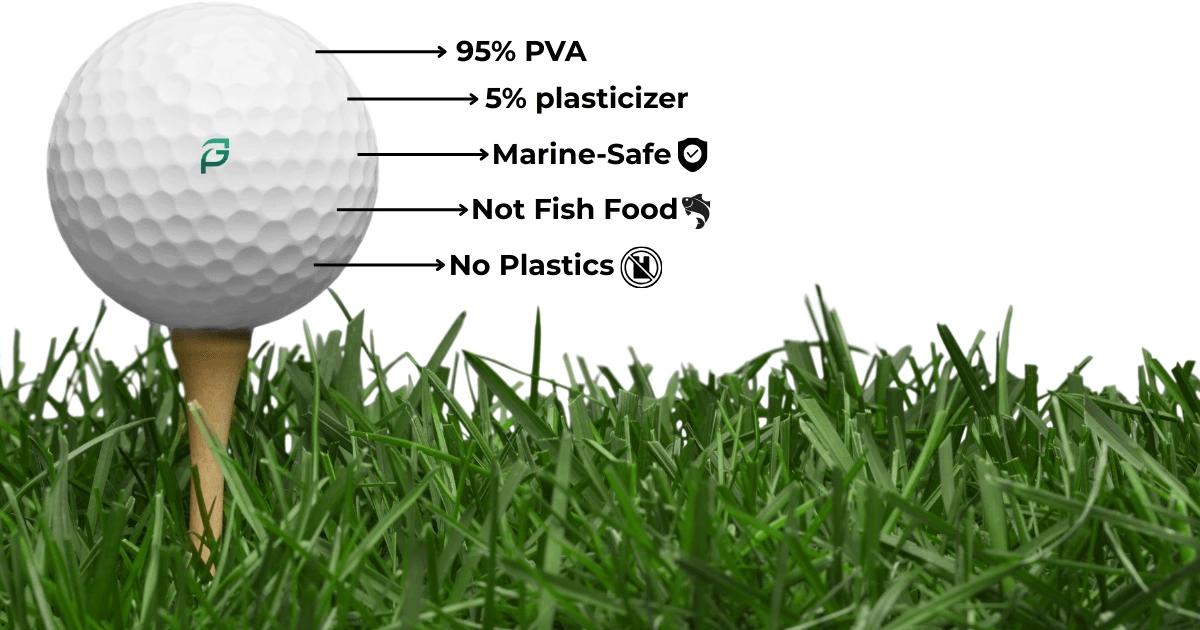
This combination gives you a ball that feels, flies, and reacts like the real thing… but doesn't linger in the environment. Once submerged, water penetrates the surface, and the structure begins to soften and dissolve. Over the course of days and weeks, it fully breaks down, leaving nothing that can harm aquatic life.
2.3 Why "Not Fish Food" Still Means Marine-Safe
Some companies market eco golf balls as fish food. That's a risky promise — it can disrupt natural diets and introduce unnecessary substances into marine environments.
We take a different approach. Our balls aren't food, but they are harmless if ingested in small accidental amounts. No toxins, no plastics, no coatings that stick around. The focus is on coexisting with nature, not altering it.
Do They Harm Fish or Ocean Life?
3.1 The Myths and Misconceptions
If you've heard that "any golf ball in the water is bad news for fish," you're not wrong — but that applies to conventional balls. Traditional golf balls are built to resist water and weather, meaning they stick around for centuries, slowly releasing microplastics.
The myth that all golf balls cause harm often comes from seeing the damage done by those plastic ones. Eco golf balls are engineered with an entirely different goal: to dissolve and leave no harmful trace.
3.2 How Our Balls React in Water
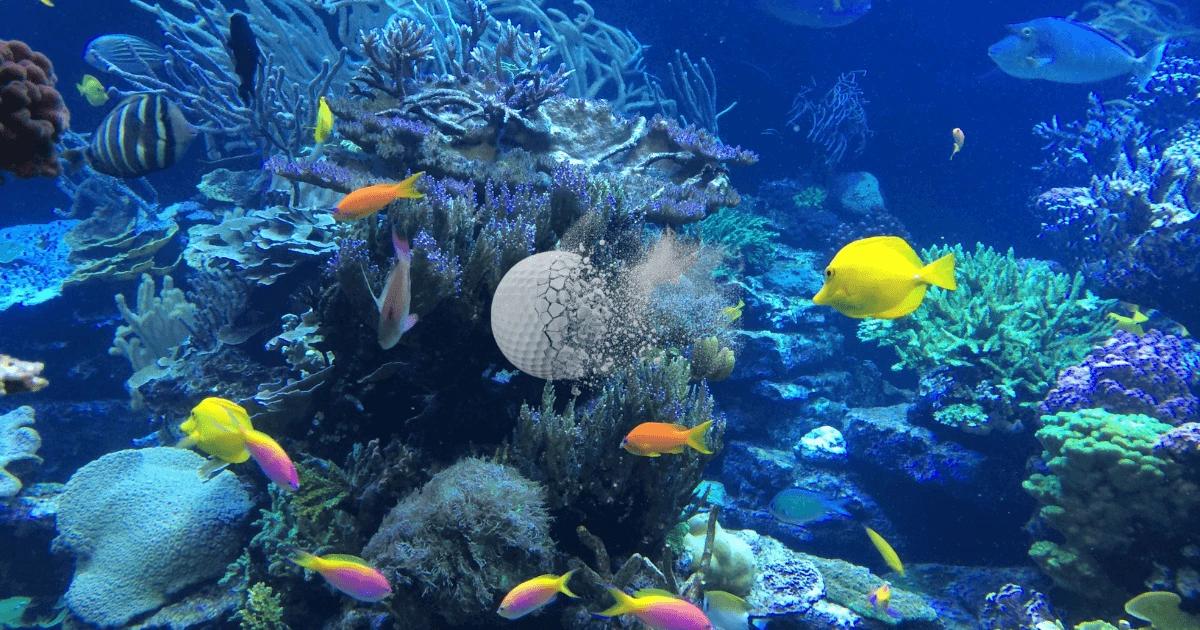
The moment a PlayGreenly ball hits the water, the clock starts. The PVA shell begins absorbing moisture, softening over the first few days. Depending on water temperature and movement, full dissolution happens in roughly two weeks.
There's no toxic runoff, no heavy metals, and no hidden chemicals — just a gradual breakdown into harmless, biodegradable components.
3.3 Tested for Safety, Designed for Peace of Mind
We've tested our formula in both freshwater and saltwater environments. The result? Zero negative impact on water quality or aquatic life. Independent lab checks confirmed that our dissolved material contains nothing harmful to fish, coral, or plant life.
So whether your ball ends up in a lake, a river, or the open ocean, you can take your swing knowing you're not contributing to the long-term pollution problem.
The Dissolution Timeline
4.1 Freshwater vs. Saltwater Breakdown
Water type plays a big role in how fast a biodegradable golf ball disappears.
Freshwater (lakes, rivers, ponds): In calm conditions, the breakdown takes around 12–16 days. Moving water, like a flowing river, can speed that up by a few days.
Saltwater (oceans, bays): Salt content accelerates the process, with most PlayGreenly balls fully dissolving within about 10–14 days. Warmer tropical waters break them down faster, while colder seas take a bit longer.
Want to see exactly how long they take to disappear?
Here's the full test: From Tee to Sea — The Timeline for Biodegradable Golf Balls to Dissolve
4.2 What's Left Behind (Spoiler: Nothing Harmful)
When the ball is gone, it's really gone. No plastic shell, no rubber core, and no synthetic toxins. The PVA and natural plasticizer blend breaks down into water-soluble components that pose no threat to marine plants or animals.
Unlike conventional balls, there's nothing to sink into the sediment or turn into microplastic over time. It's a clean disappearance — a swing you can make without guilt.
How to Play Responsibly Anywhere
5.1 Ocean, Lake, and Beach-Friendly Play
Biodegradable doesn't mean "hit and forget." Yes, PlayGreenly balls dissolve safely, but it's still best to use them thoughtfully.
Choose open, low-traffic areas where there's minimal risk of hitting wildlife or damaging coral. Avoid launching balls directly toward visible fish schools — safety first, always.
5.2 Backyard and Resort Use
One of the biggest perks of eco-friendly golf balls? You don't have to be on a course to enjoy them. Resorts, cabin docks, and even backyard nets are perfect for casual practice. No need to stress if a few end up in the water garden or pond — they'll vanish without harming plants or fish.
5.3 Setting an Example for Sustainable Golf
Every time you choose an eco ball, you're showing others that fun and responsibility can go hand in hand. Whether it's a family weekend, a corporate retreat, or a solo practice session, your choice sends a signal: golf doesn't have to leave a mark on the planet.
Pro Tip: Keep a sleeve of eco balls handy, showing friends how they work is the easiest way to spark green golf conversations.
The Takeaway: Why It's More Than Just a Golf Ball
A golf ball is just a piece of gear, until you think about where it ends up. Conventional balls stay in the water for centuries, slowly breaking down into something invisible but dangerous. Eco-friendly golf balls, like PlayGreenly's, flip that story. They dissolve without leaving a trace, protect marine life, and let you enjoy the game without the guilt.
It's not about changing how you play — it's about changing what you play with. And that small switch is the difference between adding to the problem and being part of the solution.
So the next time you're by the ocean, a lake, or even your own backyard pond, ask yourself: do you want your shot to be remembered by the scoreboard… or by the fish that have to live with it?
hoose a ball that vanishes from the water, not from your conscience.
Golf is about moments
Discover PlayGreenly’s guilt-free golf balls and make your next shot one the planet will thank you for.