For generations, the game of golf has been a sanctuary. It’s a place to connect with nature, challenge ourselves, and enjoy the tranquility of a beautifully maintained landscape. But let's be honest with each other; the sport has a bit of an environmental blind spot. We've all done it: you shank one into a water hazard or deep into the woods, and you just write that ball off. It’s gone. The problem is, it doesn't actually go away. That traditional golf ball, made of tough plastics and synthetic rubbers, will sit there for hundreds, maybe even a thousand years.
What if you didn't have to choose between your love for the game and your respect for the planet? This is where the conversation around eco friendly golf balls gets exciting, and specifically, where Ecobioball is changing the game.
The Unseen Problem on the Course
Think about the sheer number of golf balls lost every year. Estimates run into the billions. These lost balls end up in lakes, streams, forests, and roughs. While they might be out of sight, they are not harmless. As they slowly break down, they can leach microplastics and chemicals into the soil and water. For a game so deeply intertwined with natural beauty, this is a contradiction we can no longer ignore.
This is the core reason behind the innovation of the biodegradable golf ball. It’s a direct response to a problem every golfer has contributed to, often without a second thought. The goal is simple: create a ball that performs when you need it to but leaves no trace when lost.
What exactly is an Ecobioball?
An Ecobioball isn't your average golf ball. At its heart, it's a biodegradable golf ball designed with a specific, intelligent purpose. The core technology revolves around a special, non-toxic polymer that is completely safe for the environment. When the ball is in play, it feels and performs like a standard ball. It has the compression, the dimple pattern for flight, and the durability to survive a full 18 holes.
The magic, or perhaps we should say the smart science, happens when it's lost. Once submerged in water for a sustained period, the material begins to break down. This makes them the leading brand of dissolvable golf balls, but it's crucial to understand how and why they dissolve.
The Science of Disappearance: How It Works
You might be picturing a ball that vanishes the second it touches water, like a sugar cube. That’s not the case, and for good reason. A ball that fragile would be useless on the course. Instead, Ecobioballs are engineered with a specific time delay.
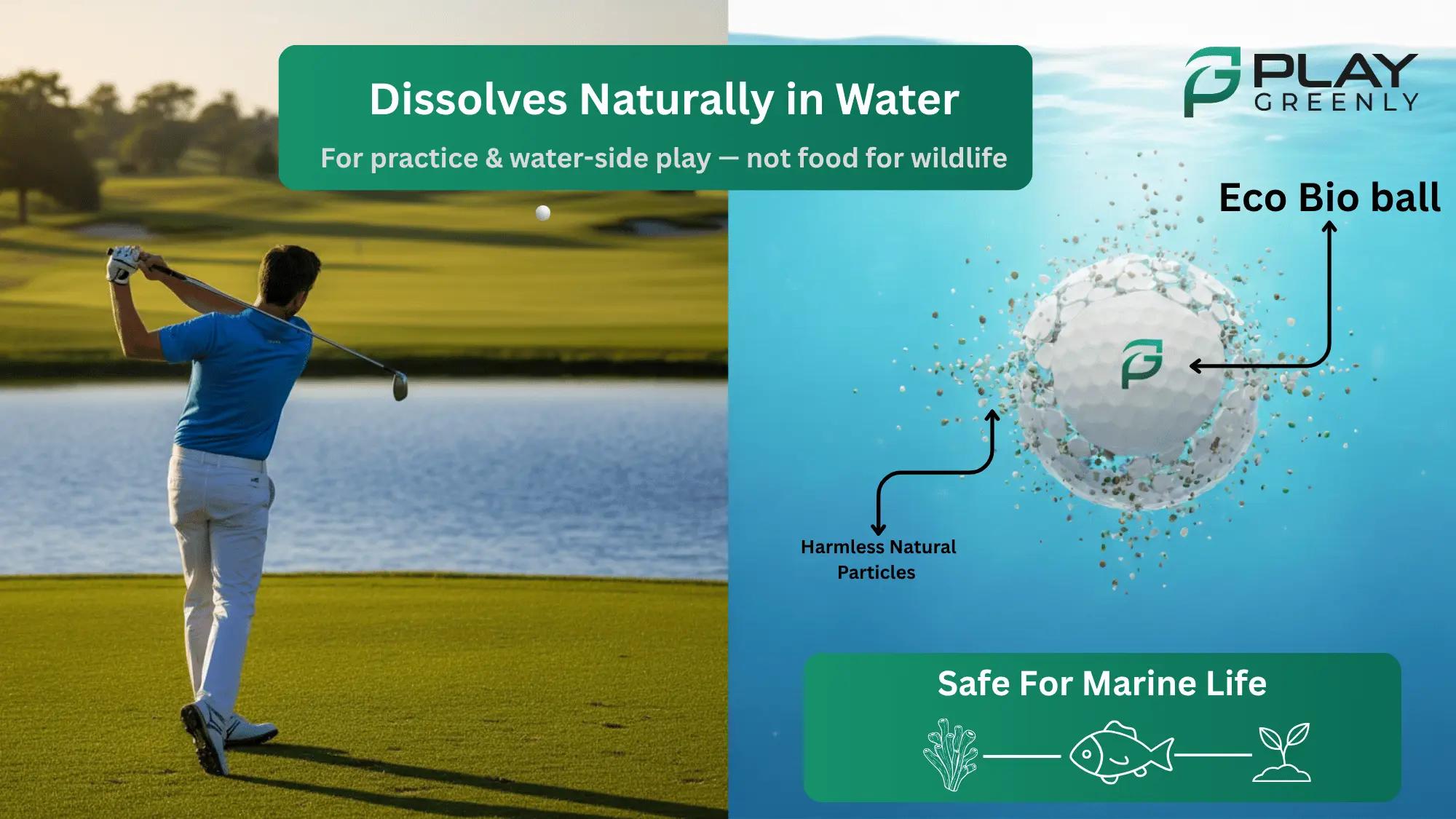
When you hit an Ecobioball into a water hazard, it will sink and sit on the bottom just like any other ball. However, after being immersed for several hours, the hydrolysis process begins. Water molecules start to break down the polymer chains in the ball's core. Over time, which is typically a matter of days depending on water temperature and conditions, the ball will soften and gradually disintegrate. The materials then become a food source for naturally occurring microorganisms, completing a clean, natural cycle.
Safety First: A Ball Good for the Green (and the Blue)
This is a critical point, so let's be perfectly clear. The materials in an Ecobioball are rigorously tested and certified to be 100% non-toxic. They break down into organic matter that is safe for aquatic life and plant life. The fish, the turtles, the birds, and the entire ecosystem of your local course pond will not be harmed by these balls.
However, and this is a very important distinction, the balls are not manufactured to be, and should never be considered, marine food. While the end products are safe and non-toxic, they are not a nutritional substance. Think of it like sawdust; it's not poisonous, but it's not food. The primary purpose is to eliminate plastic pollution, not to feed wildlife. This responsible approach ensures we are solving one environmental problem without accidentally creating another.
Pro Tip
For the best performance, treat these balls like you would any premium ball. Keep them dry in your bag between rounds. Their dissolvable properties only activate with prolonged immersion, so a quick splash or a rainy day won't affect them.
Performance Meets Conscience
I know what you're thinking: "This all sounds great for the planet, but how does it play?" This is the most common question, and the answer is genuinely impressive. Ecobioballs are not a compromise. They are designed to provide an authentic golf experience.
You can expect a consistent ball flight, a satisfying feel off the clubface, and enough spin and control for a recreational or practice round. Are they the exact same as a $50 dozen of tour-level urethane-covered balls? No, and they don't claim to be. But for the vast majority of golfers, from high-handicappers to seasoned players looking for a reliable practice ball, the performance is more than adequate. You get to enjoy your game fully, with a clear conscience.
Where Ecobioballs Truly Shine
While you can absolutely use them for a full regulation round, their sweet spot is in specific, high-loss situations:
- Driving Range Practice: Especially at ranges with water hazards. You can confidently work on that driver swing without guilt.
- Water-Heavy Courses: If your local track is lined with lagoons and creeks, these balls are a perfect match.
- Boat and Backyard Practice: They are the ultimate solution for golfers who like to hit a few balls off their boat or into a practice net in the yard. No more searching for lost balls in the bushes or worrying about leaving plastic behind.

In these scenarios, the value of a biodegradable golf ball becomes undeniable. It’s a smart, practical choice for the modern golfer.
Your Role in the Sustainable Golf Movement
Choosing to buy eco-friendly golf balls like Ecobioball is more than just a purchase; it's a vote. You're voting for a cleaner sport, for innovation that respects nature, and for a future where our golf courses are even healthier ecosystems. Every time you tee up an Ecobioball, you're making a small but powerful statement that you care about the places where you play.
It’s a simple step, but collectively, these steps have a massive impact. We can be the generation of golfers who loved the game so much, we helped protect the environment it's played in.
Ready to make your next round a sustainable one? Explore the full range of Ecobioball products and experience the future of golf today.
Frequently Asked Questions (FAQ)
Q: How long does it take for an Ecobioball to dissolve?
A: The dissolution process begins after several hours of continuous immersion in water. The ball will typically fully break down within a few days to a few weeks, depending on water temperature and conditions.
Q: Can I use these balls in a tournament?
A: While they conform to the rules of golf for size and weight, always check with the specific tournament organizers. They are perfect for casual, league, and practice play.
Q: Will the ball dissolve if it gets wet from rain or dew?
A: No. The dissolution process requires prolonged, continuous immersion. Brief exposure to rain, dew, or even a quick wash will not affect the ball's integrity during your round.
Q: Are they safe for fish and marine life?
A: Absolutely. The materials are 100% non-toxic and are safe for aquatic environments. The breakdown products are consumed by natural microorganisms. It is important to remember, however, that the balls are not food and are not intended to be a nutritional source for marine life.
Q: How does the performance compare to a standard ball?
A: Ecobioballs are engineered for excellent performance. They offer a consistent flight, good feel, and durability for a full round of golf. For the average golfer, the difference in performance is negligible, especially when weighed against the significant environmental benefit.