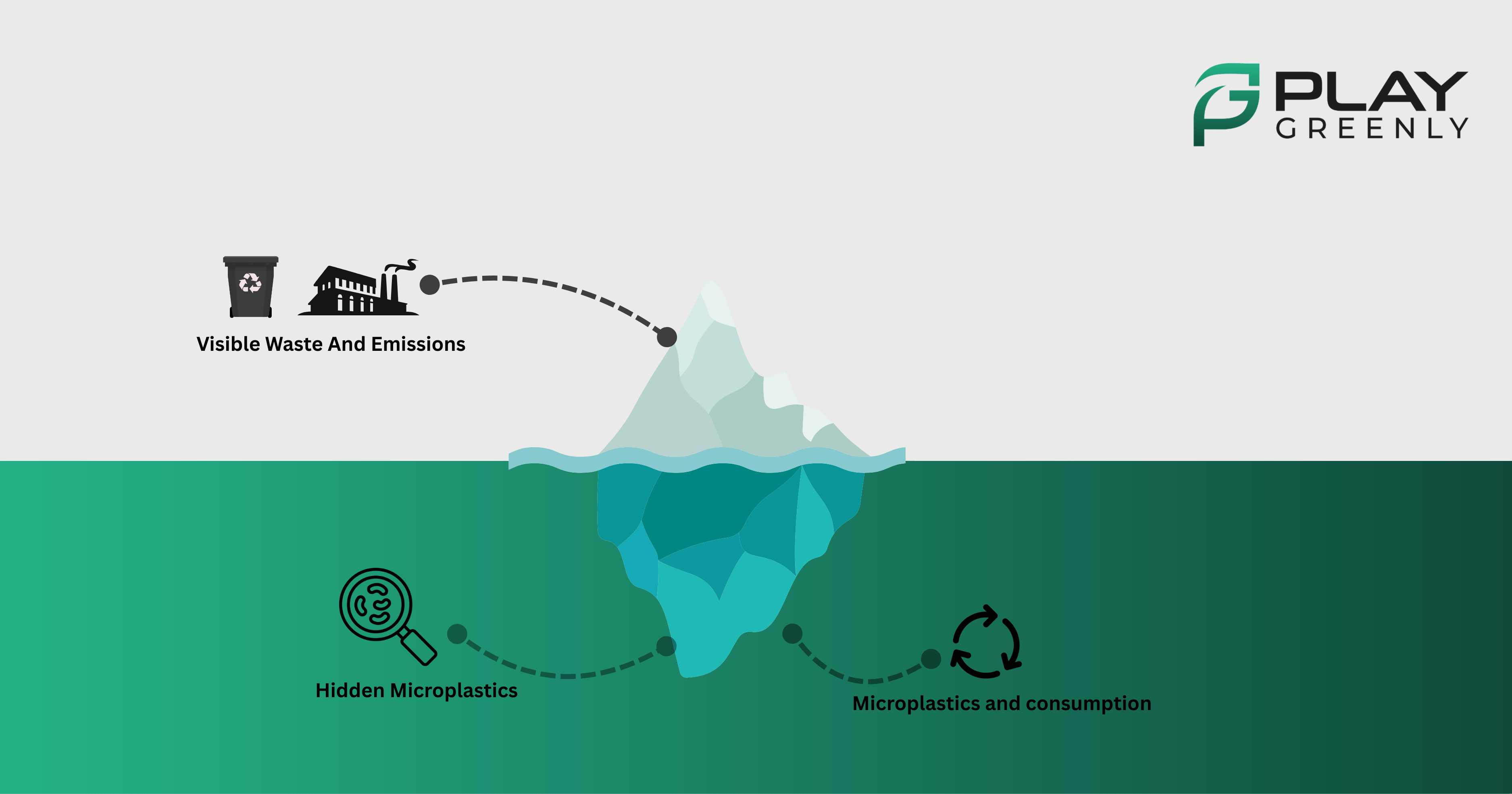
Sustainability has become one of the most common buzzwords in recent years. From reusable bags to electric cars, most of us feel we already know what the “biggest issue” is: pollution, carbon emissions, or waste. But here’s the twist, the real challenges often hide in plain sight.
In sports and recreation especially, there are countless overlooked impacts that never make the headlines. From microplastics shed by athletic clothing to the energy it takes to power massive stadiums, the biggest sustainability issues aren’t always the ones we see, they’re the ones we ignore. In this article, we’ll explore those hidden problems, explain why they matter, and show how they connect to the bigger picture of sustainable living and sports.
What’s the Biggest Issue in Sustainability Today?
The biggest issue isn’t just pollution or carbon, it’s the hidden, overlooked impacts that accumulate silently, from microplastics to wasteful habits, that most people don’t even notice.
Why hidden impacts often matter more than visible ones
When people think of “sustainability problems,” they imagine plastic bottles or smoke from factories. But in reality, invisible impacts like water overuse, synthetic fabric shedding, and transport emissions often do more damage. Because they’re harder to see, they’re easier to ignore, yet their long-term footprint is massive.
How sports reveal the overlooked challenges
Sports are the perfect lens to understand this. A football match may look clean and green, but behind it lies huge energy bills, fan travel emissions, and tons of waste gear. Similarly, a golf course may look like a natural landscape, but under the surface it can be a drain on water resources if not managed sustainably. These are the kinds of issues most people miss. The truth is, sustainability’s biggest challenge isn’t always obvious. It’s the small, hidden habits and overlooked systems that quietly add up to global problems, and that’s exactly what we’ll uncover in this blog.
Did You Know? A single synthetic jersey can shed up to 1,900 plastic microfibers in just one wash, many of which end up in rivers and oceans.
How Do Recreational Activities Add Microplastics to Waterways?
Recreational activities release microplastics into rivers and lakes mainly through synthetic sports gear and clothing that shed tiny fibers into the water.
Shedding from sports gear and synthetic clothing
Every time athletes swim in synthetic jerseys, or kayakers wear polyester wetsuits, tiny plastic fibers break off. These particles are invisible to the eye but flow straight into rivers and lakes. Golf and tennis balls made with synthetic polymers also break down slowly, releasing micro-sized fragments. Over time, these fragments accumulate and pollute aquatic ecosystems.
Evidence of microplastics in rivers and lakes
Recent studies found alarming results: recreational activity in popular rivers like Arizona’s Salt River has been directly linked to spikes in microplastic pollution. Even when gear looks harmless, its microscopic impact lingers. The problem is easy to miss because we don’t see the particles, but fish, plankton, and eventually humans feel the effects when they enter the food chain.
From swimsuits to golf balls, sports often leave behind more than memories. The microplastic trail they shed is a hidden sustainability issue that rarely gets attention, but it’s one of the fastest-growing environmental threats.

Why Travel and Transportation Are Major Hidden Impacts
The largest share of a sport’s carbon footprint often comes not from the field or facility, but from how athletes and fans travel to get there.
Athlete and team travel footprints
Professional athletes and teams constantly travel on flights, buses, and support vehicles. These journeys create huge emissions compared to the actual match or event itself. For example, a single away game may require an entire squad, staff, and equipment to fly across states or even countries. While the field looks green and natural, the carbon burned to get there is anything but sustainable.
Fan transportation to venues
It’s not just the players. Fans driving or flying to events add an even larger layer of emissions. A stadium filled with 50,000 people might actually create its biggest footprint not inside the venue, but on the highways and airports leading to it. This hidden cost is rarely linked to the sport itself, yet it’s one of the most significant sustainability challenges.
Pro Tip: Encourage carpooling or shuttle services for fans, it cuts emissions, saves parking space, and makes your event more eco-friendly.
Travel and transportation are invisible on the scoreboard, but they dominate the numbers in a sustainability audit. Until we address how people move to and from sports, the greenest stadium or course design can only go so far.
What Role Does Equipment Waste Play in Sports Sustainability?
Sports gear made from synthetic materials creates tons of waste each year, from balls and shoes to turf and uniforms, most of which isn’t recyclable.
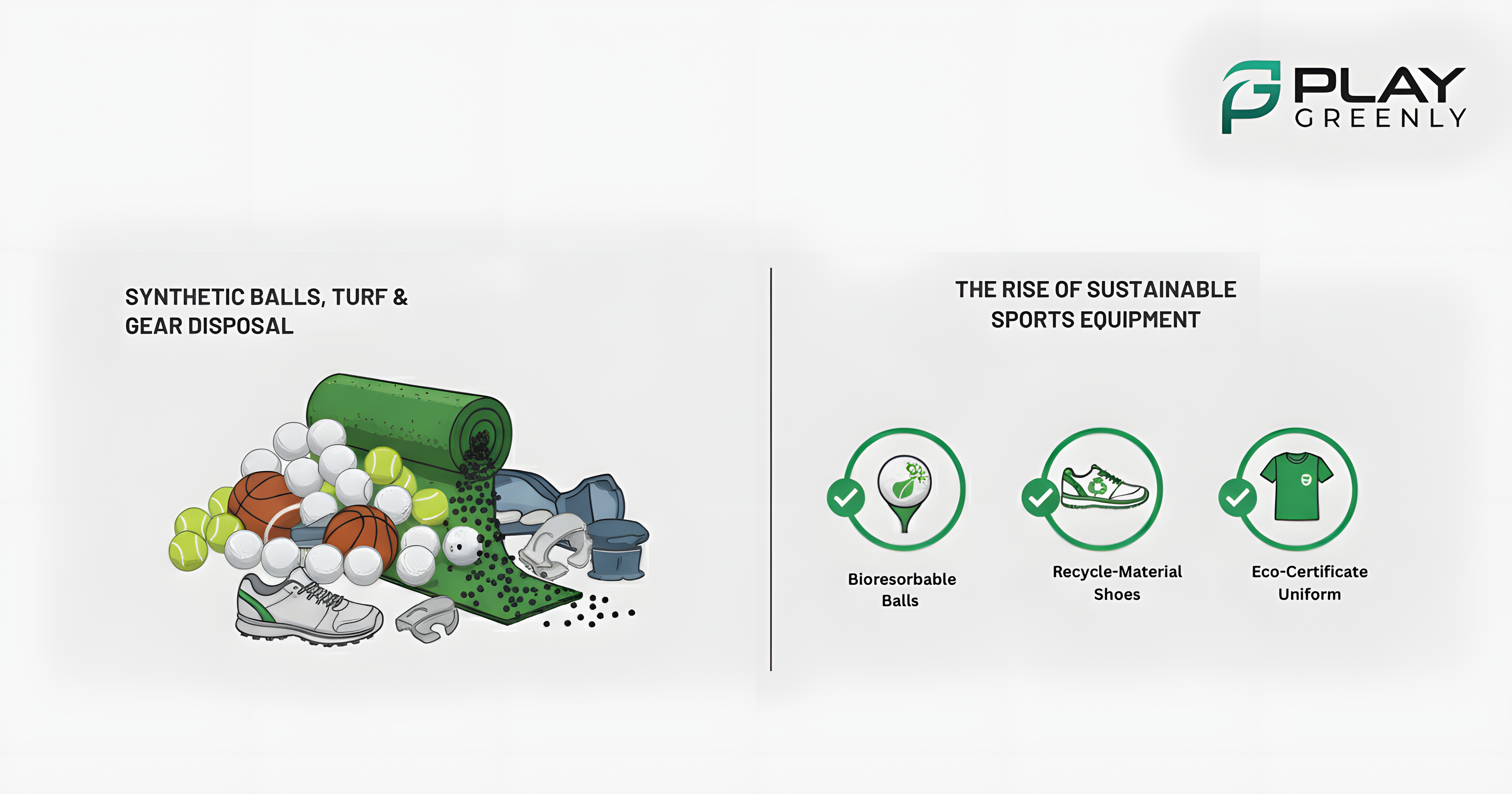
Synthetic balls, turf, and gear disposal
Think of golf balls, tennis balls, or artificial turf, all are made with plastics or rubber blends that don’t break down easily. Millions of balls end up in landfills or waterways every year, adding to long-term microplastic pollution. Synthetic turf eventually wears out too, leaving behind massive disposal challenges that few facilities are equipped to handle.
The rise of sustainable sports equipment
The good news is, new alternatives are entering the market. Biodegradable balls, recycled-material shoes, and eco-certified uniforms are helping athletes reduce their footprint. While still in early stages, these innovations show that the sports industry doesn’t have to accept waste as an unavoidable byproduct. Sports equipment waste may not grab headlines, but it’s one of the most persistent and overlooked sustainability problems. Choosing eco-friendly gear is a small but powerful step toward reducing the hidden costs of play.
How Do Extreme Weather Events Disrupt Sports Facilities?
Climate change is making sports facilities more vulnerable to flooding, droughts, and heat waves, disrupting both play and maintenance.
Floods, droughts, and heat waves on playability
Heavy rains can flood fields and fairways, forcing events to cancel or postpone. On the other extreme, droughts dry out turf, making surfaces harder, patchier, and unsafe for athletes. Heat waves create risks for players and fans alike, reducing comfort and in some cases, even safety. These shifts show how climate change directly impacts the everyday experience of sports.
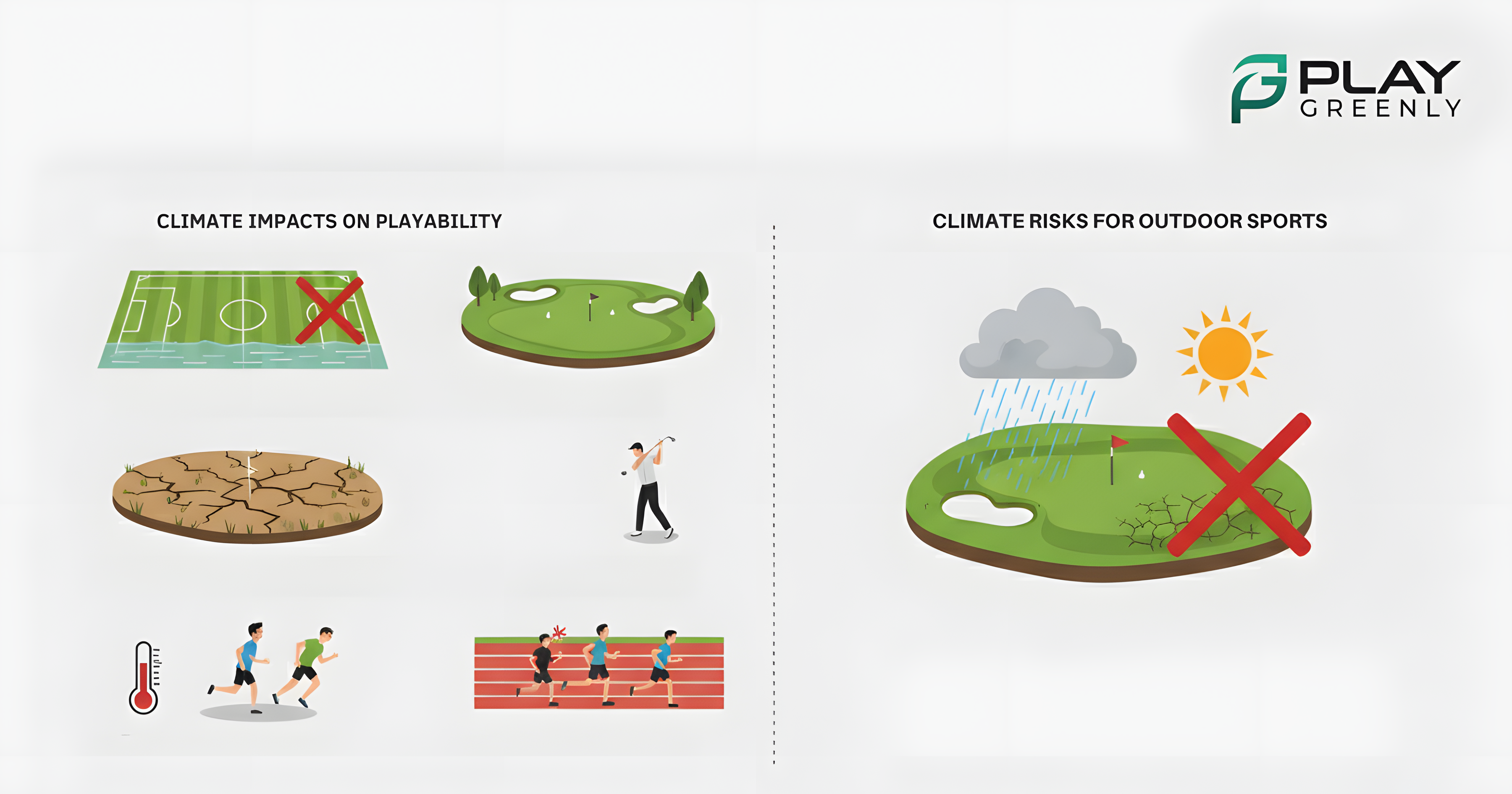
Climate risks for golf and other outdoor sports
Golf courses, football fields, and running tracks are all land-intensive. When heat stress or water shortages strike, maintaining them becomes extremely difficult. Some golf courses already face watering restrictions or rising costs that threaten their long-term viability. The more unpredictable the climate becomes, the harder it is for outdoor sports to guarantee playability. Extreme weather is no longer a distant problem, it’s already reshaping how and where we play. For sports to survive, facilities must adapt to these new climate realities.
How Do Venue Energy Use and Infrastructure Contribute?
Sports facilities consume massive amounts of energy through lighting, HVAC, and turf maintenance, making them one of the most overlooked sustainability challenges.
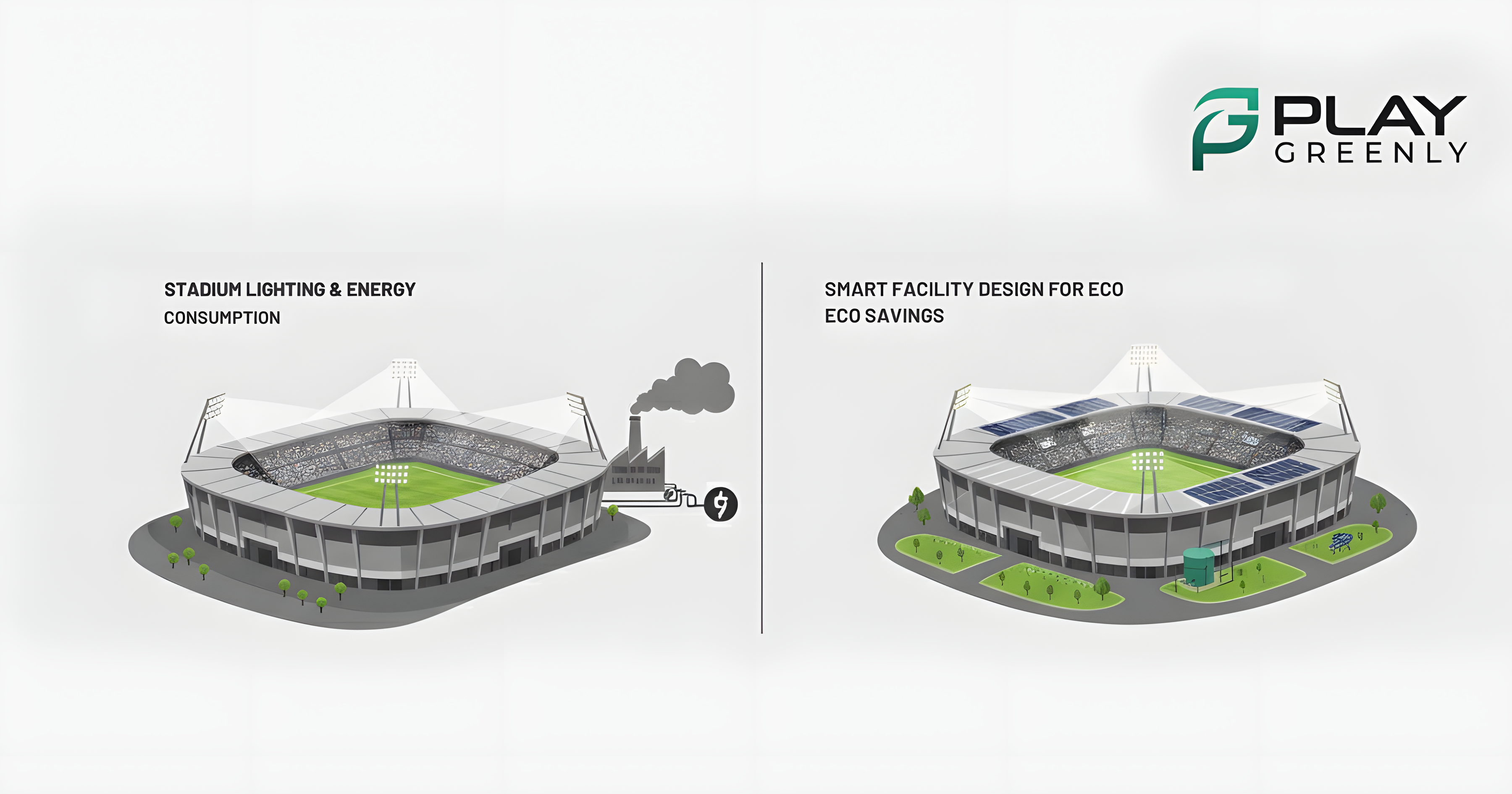
Stadium lighting and energy consumption
From late-night matches to massive events, stadiums rely on floodlights, giant screens, and sound systems. A single evening match can use as much electricity as a small neighborhood. Most of this power still comes from fossil fuels, leaving a carbon footprint that spectators never see while cheering in the stands.
Smart facility design for eco savings
The good news? Many venues are shifting to LED lighting, solar panels, and energy-efficient cooling systems. Some are even reusing rainwater to manage turf and landscaping. These changes reduce both operational costs and environmental impact, proving that going green can actually save money while setting a powerful example. Energy use and infrastructure may stay hidden behind the glamour of sports, but they quietly drive up emissions. Smarter design and renewable energy make venues both sustainable and financially resilient.
So, What’s the Real Missed Issue in Sustainability?
The biggest issue isn’t plastic bottles or recycling, it’s the everyday hidden choices and conveniences that quietly add up to a global sustainability crisis.
Why convenience often trumps responsibility
Most people want to live sustainably, but when it comes to convenience, green habits often slip. Driving to a nearby game instead of carpooling, buying new gear instead of repairing, or ignoring microplastics because they’re invisible — these small habits collectively create a massive impact. The problem is not a lack of solutions, but the ease of ignoring them.
How small overlooked choices add up globally
A single synthetic jersey shedding microplastics may feel trivial. But multiply that by millions of players worldwide, and suddenly it’s an ecological problem on the scale of industrial pollution. The hidden issue isn’t just pollution itself, but our tendency to underestimate how “small” choices scale up. The most overlooked issue in sustainability is not one single material or resource, it’s the invisible daily actions that escape our attention. Until we recognize them, true sustainability will always stay just out of reach.
Conclusion: Seeing the Unseen in Sustainability
Sustainability isn’t just about banning plastics or planting more trees. The real challenge lies in the hidden issues we often miss, microplastics in our gear, travel emissions from games, water use on fields, or the energy behind stadium lights. These are the quiet, everyday factors that add up to something far bigger than we realize. The good news is, once we see them, we can start changing them. From fans to facility owners, every small choice, carpooling, choosing sustainable gear, supporting eco-certified venues, matters.
At PlayGreenly, we believe real change starts by noticing the invisible. That’s why our mission goes beyond golf balls, it’s about proving that even the most overlooked habits can be redesigned for a greener future.
The future of sports isn’t just about how we play. It’s about how we care.