If you've been around golf long enough, you've seen it happen, that one slice off the tee that sails straight into the water. For years, most golfers never thought twice about it. "Eh, just another lost ball," right?
But here's the thing nobody told us: those "lost" balls don't actually go anywhere. Conventional plastic-core golf balls can sit at the bottom of lakes and oceans for hundreds of years, slowly breaking down into microplastics that fish, birds, and even humans eventually end up living with.
That's why eco golf balls showed up. They promised something better, balls that dissolve naturally, leave no toxins behind, and give you a swing you don't have to feel guilty about.
But let's be honest… not every eco golf ball is created equal. Some dissolve halfway, some make bold claims without proof, and some even market themselves as fish food (yikes).
So the real question is: when you line them up, how does PlayGreenly actually compare to the other "eco" options out there? And which one should you really trust in your bag?
Why Are Golfers Switching to Eco Golf Balls in 2025?
Think about the last time a shot of yours ended up in the water. Most of us laugh it off, grab another ball, and keep playing. But here's the part nobody tells you, that ball is still down there. Not for days, not for months, but for generations.
1.1 The hidden problem with plastic golf balls
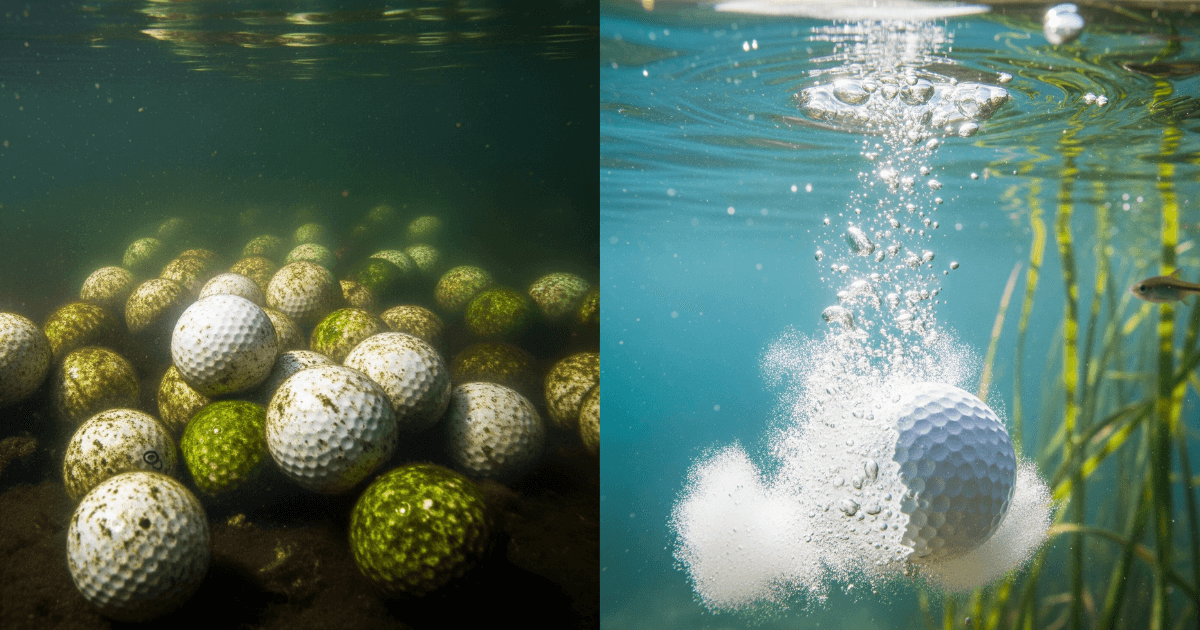
Traditional golf balls are built like little tanks. A rubber core wrapped in a hard plastic shell means they can survive swing speeds of 100+ mph. That durability makes sense on the course… but when the ball sinks into a lake or the ocean, it becomes a long-term pollutant. It doesn't dissolve. It doesn't break down. It just sits there, slowly releasing microscopic plastic particles into the water.
Those particles, called microplastics, don't stay put. Fish can swallow them, birds can carry them, and eventually they creep back into our own food chain. One lost ball doesn't seem like much, but multiply it by the millions lost every year, and you've got a hidden environmental problem most golfers never even think about.
1.2 How eco-friendly options are changing the game
Now picture a different story. You take the same swing over water, the ball splashes down… and instead of sitting there for centuries, it gradually dissolves. No plastic shell, no toxins, no microplastics. Just a clean disappearance.
That's the promise of biodegradable golf balls. They're not about replacing tour-grade balls on championship greens. They're about giving everyday golfers the freedom to practice anywhere, docks, backyards, beaches, without adding to the plastic problem.
And here's why it matters: the more casual golfers choose eco-friendly balls, the less invisible waste we leave behind. It's a small switch in equipment, but it's shifting the culture of golf toward something cleaner, smarter, and a lot more responsible.
Did You Know?
PlayGreenly golf balls use PVA — the same safe material in laundry pods and medical packaging that dissolves cleanly in water.
Can Eco Golf Balls Really Perform Like Plastic Ones?
Here's the first thing most golfers ask: "Do these eco balls even feel like a real golf ball?" Fair question.
2.1 Swing feel and distance differences
Let's be straight, biodegradable golf balls aren't built to win long-drive contests. They don't have the explosive core or the tour-level spin of a $5 plastic ball. But that doesn't mean they feel cheap or "fake."

PlayGreenly's balls are engineered to mimic the essentials: the crisp contact off the clubface, the satisfying arc in the air, the bounce you expect when the ball lands. Sure, the flight is a little shorter, and the spin won't shape shots like a pro ball, but that's not the point. These balls aren't chasing trophies; they're chasing guilt-free play.
For backyard chipping, dockside swings, or casual practice rounds, they perform exactly the way you want them to: fun, natural, and stress-free.
2.2 Dissolution timelines explained
Now let's talk about what happens after the shot.
Traditional golf balls: once they're in the water, they're basically permanent. Studies suggest they can sit there for 200 years or more without breaking down.
Biodegradable alternatives: designed to dissolve gradually over months, not years.
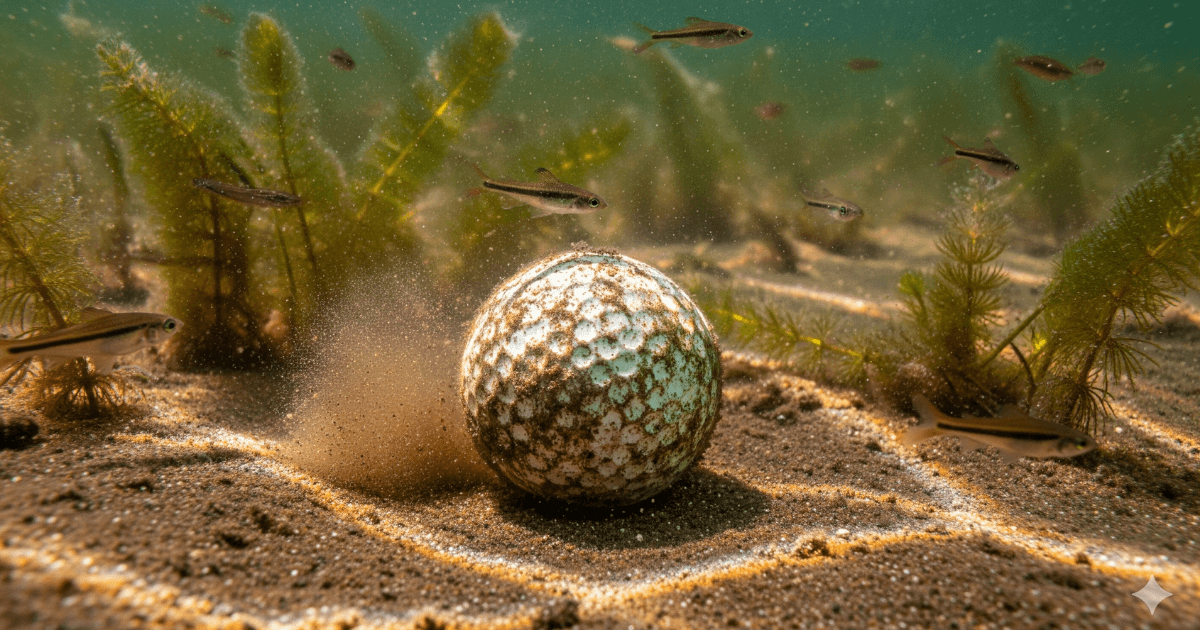
PlayGreenly eco balls: a completely different story. In freshwater, they typically dissolve within 12–16 days. In saltwater, the process is even faster, usually 10–14 days. Temperature and water movement can speed things up, but either way, the ball vanishes in weeks, not centuries.
That balance is intentional. The ball holds up during play, but once it's lost, nature does the cleanup. No microplastics, no toxic leftovers, nothing that can hurt marine life.
What Makes PlayGreenly Different from Other Eco Golf Ball Brands?
Most eco golf balls claim to be "green," but very few share what's actually inside. PlayGreenly keeps it simple and transparent.
3.1 Safe PVA-based formula
Each ball is made from about 95% polyvinyl alcohol (PVA), a safe, water-soluble material also used in things like medical packaging and laundry pods, plus 5% natural plasticizer for flexibility.
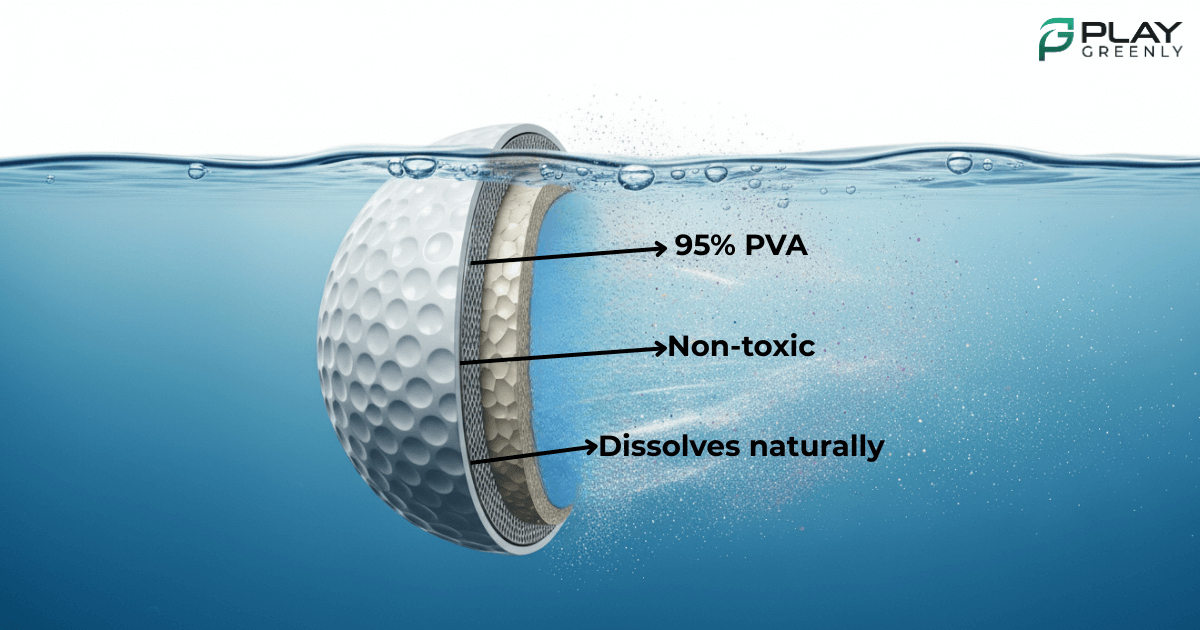
That's it. No mysterious compounds, no proprietary blends that could mean anything. You're holding a golf ball you can actually understand.
The result? A ball that feels solid in your hands, flies clean off the clubface, and still dissolves completely when it ends up in the water.
3.2 Independent testing for marine safety
Here's where PlayGreenly pulls ahead. Instead of just promising eco safety, the formula has been independently tested in both freshwater and saltwater environments.
The results show PlayGreenly balls break down without creating harmful microplastics, and don't leach toxins into the water.
The verdict: no toxins, no heavy metals, no harmful residues left behind. That means if a fish or bird accidentally comes across a dissolved ball, there's nothing in it that disrupts their health or the ecosystem.

3.3 Built for backyard, lakeside, and resort play
PlayGreenly balls aren't built for televised tournaments, and that's by design. They're made for the moments that matter to everyday golfers:
- Chipping into the lake with friends,
- Tee shots from a dock or boat,
- Casual practice in the backyard or at a resort.
They give you the freedom to swing anywhere without worrying about what's left behind. That mix of fun + responsibility is what sets PlayGreenly apart.
How Other Eco Golf Balls Stack Up
Some brands use starch blends or plant-based resins. They sound eco-friendly, but many don't dissolve fully in water, they just break down slowly over time. That means they're not always the marine-safe option golfers expect.
2.1 Starch-Based Golf Balls
Most eco golf balls on the market use biodegradable fillers that don't fully dissolve in water, making them less effective for ocean and lake play.
2.2 "Fish Food" Golf Balls
A few companies market their balls as "fish food." It sounds clever, but it's risky. Fish don't need artificial feed, and introducing foreign substances can disturb natural diets.
"Fish food" eco balls may sound eco-friendly, but they can disrupt marine ecosystems rather than protect them.
Pro Tip
Don't trust the label alone — always look for independent lab results to confirm eco golf ball safety.
2.3 Cellulose-Based Options
Many alternatives skip independent testing. Without published lab results, "eco-friendly" becomes more of a label than a fact.
Unlike PlayGreenly, many eco ball brands lack independent testing, so their safety claims remain unverified.
Real-World Performance Comparison
When you're choosing an eco golf ball, the decision usually comes down to three things:
3.1 Flight Distance and Accuracy
- Safety: Does the ball truly dissolve without leaving toxins or microplastics?
- Performance: Does it still give you a natural swing feel, even if it's not tour-grade?
- Transparency: Has the brand actually shared what's inside the ball and how it breaks down?
If a product can't check all three boxes, it's not really delivering on the eco promise.
The right eco golf ball should be non-toxic, deliver a natural swing feel, and be backed by transparent testing.
3.2 Durability Through 9-18 Holes
This is where PlayGreenly makes the choice simple.
- Proven safety: Tested in both freshwater and saltwater with zero harmful residues.
- Trusted formula: Made with a 95% PVA base, safe, dissolvable, and non-toxic.
- Real play moments: Designed for backyard practice, dockside swings, and resort fun, not just for "green marketing."
With PlayGreenly, you're not guessing, you're playing with a ball that's been engineered and tested to protect the places you love to play.
Among eco golf balls, PlayGreenly is the most reliable choice because it combines safe materials, tested marine safety, and a swing feel casual golfers actually enjoy.
3.3 Feel and Spin Control
Safety testing is critical for any eco golf ball, but it's especially important for those that claim to be "fish food" or use materials that don't fully dissolve.
Without independent testing, it's impossible to know what's actually in the ball or how it breaks down in water.
PlayGreenly's commitment to transparency and safety sets it apart from other eco golf ball brands.
Price vs. Value: Is PlayGreenly Worth It?
When you're choosing an eco golf ball, the decision usually comes down to three things:
4.1 Key Decision Factors to Look At
- Safety: Does the ball truly dissolve without leaving toxins or microplastics?
- Performance: Does it still give you a natural swing feel, even if it's not tour-grade?
- Transparency: Has the brand actually shared what's inside the ball and how it breaks down?
If a product can't check all three boxes, it's not really delivering on the eco promise.
The right eco golf ball should be non-toxic, deliver a natural swing feel, and be backed by transparent testing.
4.2 Why PlayGreenly Stands Out
This is where PlayGreenly makes the choice simple.
- Proven safety: Tested in both freshwater and saltwater with zero harmful residues.
- Trusted formula: Made with a 95% PVA base, safe, dissolvable, and non-toxic.
- Real play moments: Designed for backyard practice, dockside swings, and resort fun, not just for "green marketing."
With PlayGreenly, you're not guessing, you're playing with a ball that's been engineered and tested to protect the places you love to play.
Among eco golf balls, PlayGreenly is the most reliable choice because it combines safe materials, tested marine safety, and a swing feel casual golfers actually enjoy.
Making the Right Choice for Your Eco Golf Ball Needs
When you're choosing an eco golf ball, the decision usually comes down to three things:
5.1 Key Decision Factors to Look At
- Safety: Does the ball truly dissolve without leaving toxins or microplastics?
- Performance: Does it still give you a natural swing feel, even if it's not tour-grade?
- Transparency: Has the brand actually shared what's inside the ball and how it breaks down?
If a product can't check all three boxes, it's not really delivering on the eco promise.
The right eco golf ball should be non-toxic, deliver a natural swing feel, and be backed by transparent testing.
5.2 Why PlayGreenly Stands Out
This is where PlayGreenly makes the choice simple.
- Proven safety: Tested in both freshwater and saltwater with zero harmful residues.
- Trusted formula: Made with a 95% PVA base, safe, dissolvable, and non-toxic.
- Real play moments: Designed for backyard practice, dockside swings, and resort fun, not just for "green marketing."
With PlayGreenly, you're not guessing, you're playing with a ball that's been engineered and tested to protect the places you love to play.
Among eco golf balls, PlayGreenly is the most reliable choice because it combines safe materials, tested marine safety, and a swing feel casual golfers actually enjoy.
Ready to Choose the Right Eco Golf Ball?
Experience PlayGreenly's proven combination of safety, performance, and transparency. Join thousands of golfers making the responsible choice.